Symptom Relief Isn’t Support: Why Frontline Workers Distrust Wellness Days and Apps
Dr. Charles Castillo
Mental Resilience Counseling | THE P.H.O.E.N.I.X. MODEL™
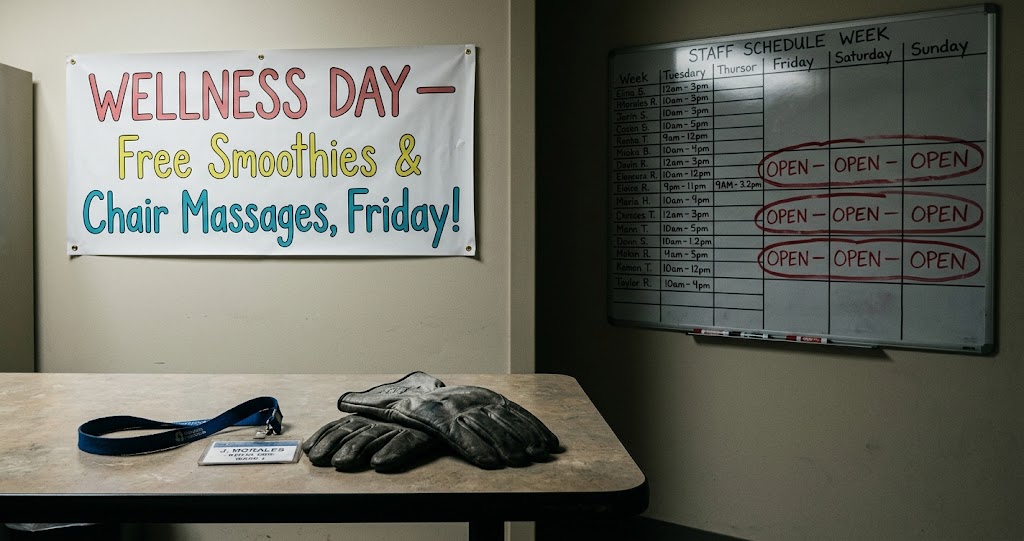
A wellness day or a resilience app for frontline teams tends to produce the same disappointment: low turnout, polite feedback, and zero change in how people actually feel about their jobs. The instinct is to blame the app. The real problem is usually what the app was asked to fix.
Frontline workers distrust wellness days, apps, and surface-level wellbeing programs because those tools treat the symptoms of strain — stress, fatigue — while leaving the actual conditions causing it untouched: chronic overload, understaffing, poor communication, or ineffective leadership. As Dr. Charles Castillo puts it, employees become skeptical when support addresses symptoms but ignores the conditions creating the strain; they want meaningful change, not temporary relief. A smoothie bar doesn’t fix an unfilled shift.
Why Do Frontline Workers Distrust Wellness Days, Apps, and Surface-Level Wellbeing Programs?
Because those tools treat symptoms, not causes. Frontline workers live daily with chronic overload, understaffing, and communication breakdowns — and a wellness day or app that never touches those conditions reads as tone-deaf, not helpful. Support feels performative when leadership encourages self-care while leaving the actual structural problems unchanged. Workers want meaningful change to the conditions creating the strain, not a temporary distraction from it.
Expert Insight — Dr. Charles Castillo
“Employees become skeptical when support addresses symptoms but ignores the conditions creating the strain. They want meaningful change, not temporary relief.”
What Do HR Executives Get Wrong About Frontline Wellbeing Support?
The most common error is addressing symptoms while the conditions creating them go untouched. Employees become skeptical when support addresses symptoms but ignores the conditions creating the strain — a wellness day scheduled on top of chronic understaffing doesn’t read as care, it reads as evidence the organization hasn’t noticed the actual problem.
The second error is a mismatch between message and action. Support feels performative when organizations encourage self-care while leaving chronic overload, poor communication, inadequate staffing, or ineffective leadership unchanged. People look for actions that match the message — and frontline teams, who live the conditions every shift, notice the gap faster than anyone.
Why Is the Business Consequence Larger Than It Looks?
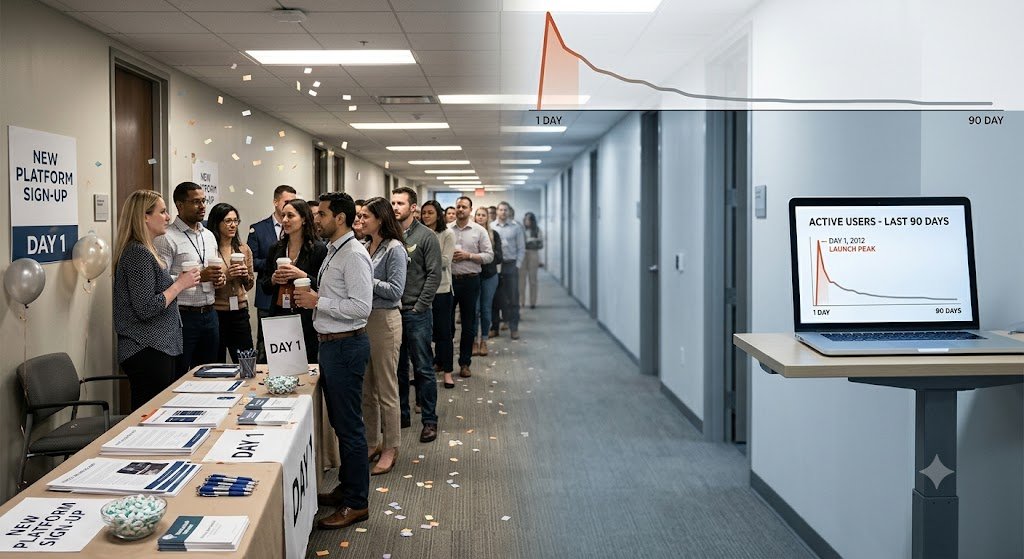
Distrust among frontline teams doesn’t stay contained to one program. Word moves fast on a floor or a unit, and a wellness day that lands as tone-deaf becomes a story people tell each other — making every future effort, including the ones that might actually help, harder to introduce.
The guidance here is specific, not a matter of tone. NIOSH’s 2024 guidance on supporting mental health in the workplace recommends organizational fixes and supportive supervision alongside individual resources — not instead of them. OSHA’s employer guidance similarly recommends identifying and reducing workplace stressors directly, treating resilience supports as a complement to that work, never a replacement for it. The U.S. Surgeon General’s Framework names Protection from Harm and Work-Life Harmony as core organizational essentials — conditions a wellness app cannot substitute for. And NIOSH’s 2024 call to address work-related psychosocial hazards frames chronic stressors like understaffing and overload explicitly as occupational risks requiring organizational attention, not individual coping resources alone.
How Is THE P.H.O.E.N.I.X. MODEL™ Different From ‘Just Another Wellness Initiative’?
THE P.H.O.E.N.I.X. MODEL™ is not a wellness program. It is an operational resilience framework that strengthens leadership, teams, and organizational systems while helping individuals build resilience and anchored hope before adversity leads to burnout or turnover — a structural approach, not a standalone perk.
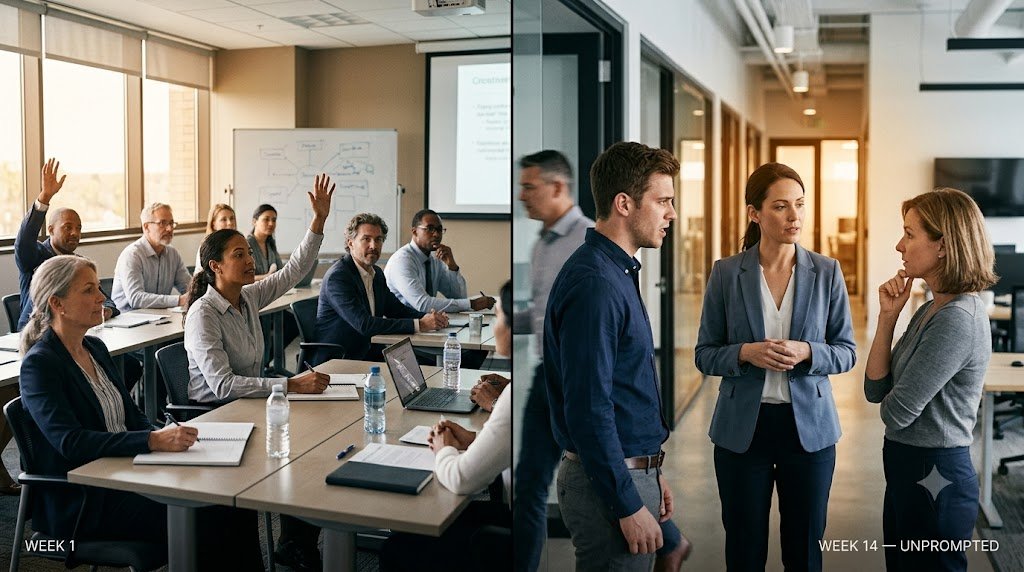
That distinction only becomes credible through consistency, not a single announcement. Leadership must move from offering isolated programs to building a culture that values resilience, trust, psychological safety, and operational stability. “They want meaningful change, not temporary relief,” as Dr. Castillo puts it — credibility comes when employees see consistent action, not occasional initiatives.
Surface-Level Wellness Program vs. Operational Resilience Framework
Table 1. Two Different Categories, Often Confused
| Surface-Level Wellness Program | Operational Resilience Framework |
|---|---|
| Targets individual stress symptoms | Targets leadership, teams, and organizational systems |
| One-off events: wellness days, apps | Consistent, ongoing practice |
| Leaves staffing, workload, leadership unchanged | Works alongside structural change |
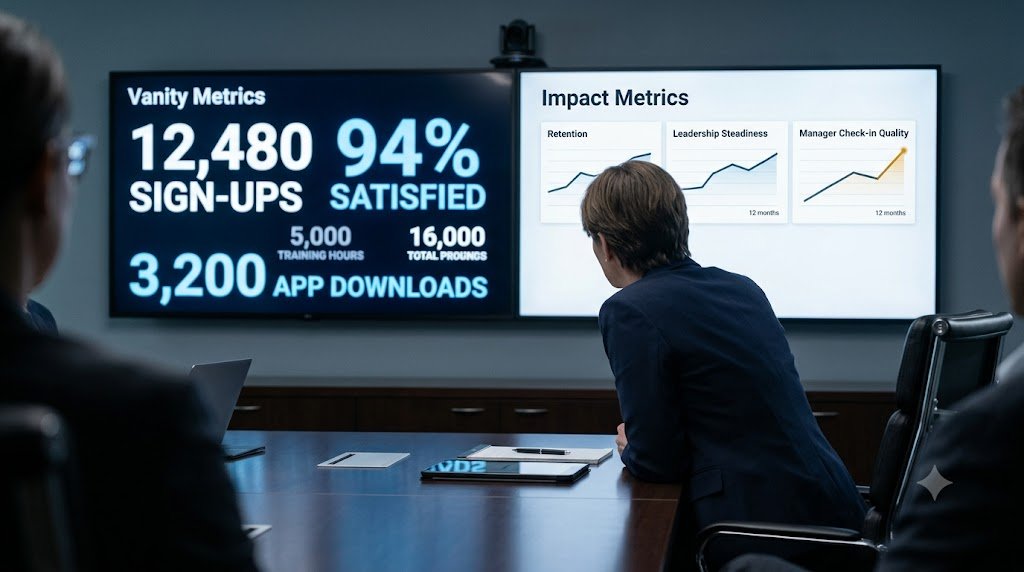
| Measured by attendance or downloads | Measured by leadership consistency and workforce stability |
| Feels performative under real strain | Builds credibility through visible, consistent action |
Frontline workers can tell these apart quickly — the difference shows up in whether anything structural actually changes. Framing drawn directly from Dr. Charles Castillo’s Money Dialog answers.
What Should HR Leaders Do First?
- Name the structural conditions before offering anything else. Acknowledge overload, understaffing, or leadership gaps explicitly, publicly, before introducing any wellness tool — silence on the obvious reads as not paying attention.
- Match the message to the action. Don’t encourage self-care while the conditions causing the strain stay untouched; frontline teams notice that mismatch faster than any other audience.
- Position any tool as part of an operational framework, not a standalone perk. Take the Anchored Hope Index™ at https://anchoredhopeindex.com and introduce it as one piece of a structural resilience approach — never as a stand-alone wellness day or app.
- Build consistent action over time, not occasional initiatives. Credibility comes when employees see leadership behave the same way across months, not from a single well-produced launch.
- Expect trust to rebuild slowly. Frontline skepticism is earned back through visible follow-through, not through better messaging around the next event.
Take the Anchored Hope Index™
Every wellness day that lands flat with frontline workers makes the next one harder to sell — cynicism compounds fast on a floor or a unit where people talk. Take the Anchored Hope Index™ at https://anchoredhopeindex.com as part of an operational resilience approach before you spend credibility on another one-off gesture.
Disclaimer
Disclaimer: The Anchored Hope Index™ is an educational and organizational development tool intended to support reflection, awareness, and discussion. It is not a diagnostic, clinical, or mental health assessment instrument and should not be used as a substitute for professional mental health evaluation or treatment.
Frequently Asked Questions
Why do frontline workers distrust wellness days, apps, and surface-level wellbeing programs?
Because those tools address symptoms — stress, fatigue — while leaving the actual conditions creating the strain untouched: chronic overload, understaffing, poor communication, or ineffective leadership. Workers want meaningful change, not temporary relief.
What makes wellbeing support feel performative instead of real?
Support feels performative when organizations encourage self-care while leaving chronic overload, poor communication, inadequate staffing, or ineffective leadership unchanged. People look for actions that match the message.
How is THE P.H.O.E.N.I.X. MODEL™ different from a typical wellness initiative?
It is not a wellness program. It is an operational resilience framework that strengthens leadership, teams, and organizational systems while helping individuals build resilience and anchored hope — before adversity leads to burnout or turnover.
Isn’t any wellness effort better than nothing, even if it's surface-level?
Not if it comes without acknowledging the real conditions. A surface-level gesture offered instead of addressing overload or staffing can damage trust more than offering nothing, because it signals the organization isn't paying attention. Take the Anchored Hope Index™ at https://anchoredhopeindex.com as part of a structural approach, not a substitute for one.
What must leadership change for support efforts to feel credible?
Leadership must move from offering isolated programs to building a culture that values resilience, trust, psychological safety, and operational stability. Credibility comes from consistent action, not occasional initiatives.
Is the Anchored Hope Index™ itself just another surface-level wellness tool?
No. It's an educational, non-clinical reflection instrument meant to be used as one piece of a structural resilience approach, not offered in place of addressing real workload or staffing conditions.
Why do frontline teams notice this mismatch faster than other groups?
They live the structural conditions — staffing gaps, workload, shift pressure — every single day, which makes any gap between a wellness message and the actual environment immediately visible to them.
References
- NIOSH, CDC — Supporting Mental Health in the Workplace, April 15, 2024. https://www.cdc.gov/niosh/bulletin/2024/mental-health-work.html
- Occupational Safety and Health Administration — Workplace Stress: Guidance and Tips for Employers, current OSHA guidance. https://www.osha.gov/workplace-stress/employer-guidance
- Office of the U.S. Surgeon General, U.S. Department of Health and Human Services — Framework for Workplace Mental Health and Well-Being, 2022 (page reviewed January 24, 2025). https://www.hhs.gov/surgeongeneral/reports-and-publications/workplace-well-being/index.html
- NIOSH, CDC — An Urgent Call to Address Work-Related Psychosocial Hazards and Improve Worker Well-Being, April 10, 2024. https://www.cdc.gov/niosh/bulletin/2024/workplace-psychosocial-hazards.html