The Trust Gap Before the Program Starts: Why Employees Distrust Wellness Initiatives Meant to Help Them
Dr. Charles Castillo
Mental Resilience Counseling | THE P.H.O.E.N.I.X. MODEL™
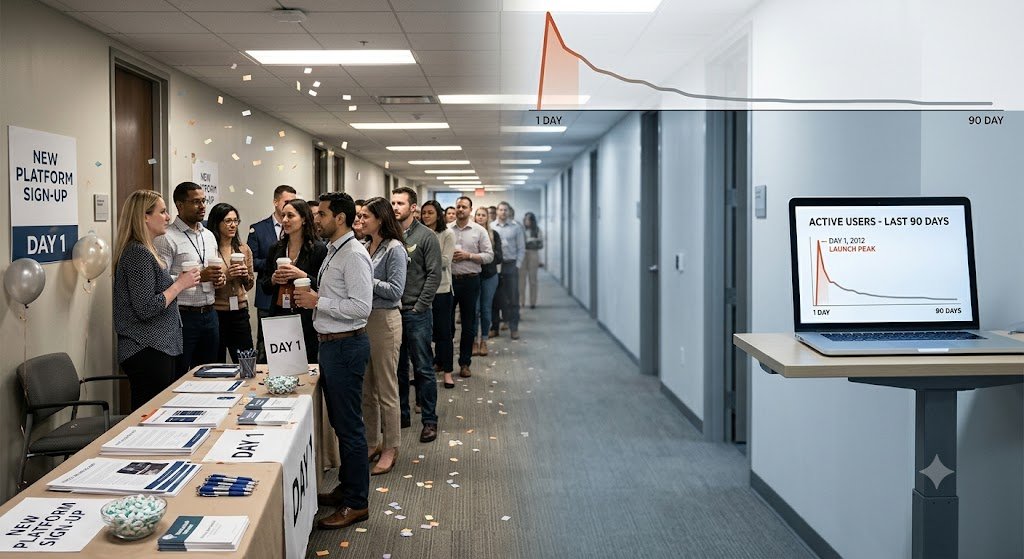
Folded arms instead of sign-ups: that’s often what greets a wellbeing program launched with a real budget and real intention. The instinct is to read that as apathy. The truer explanation is usually trust.
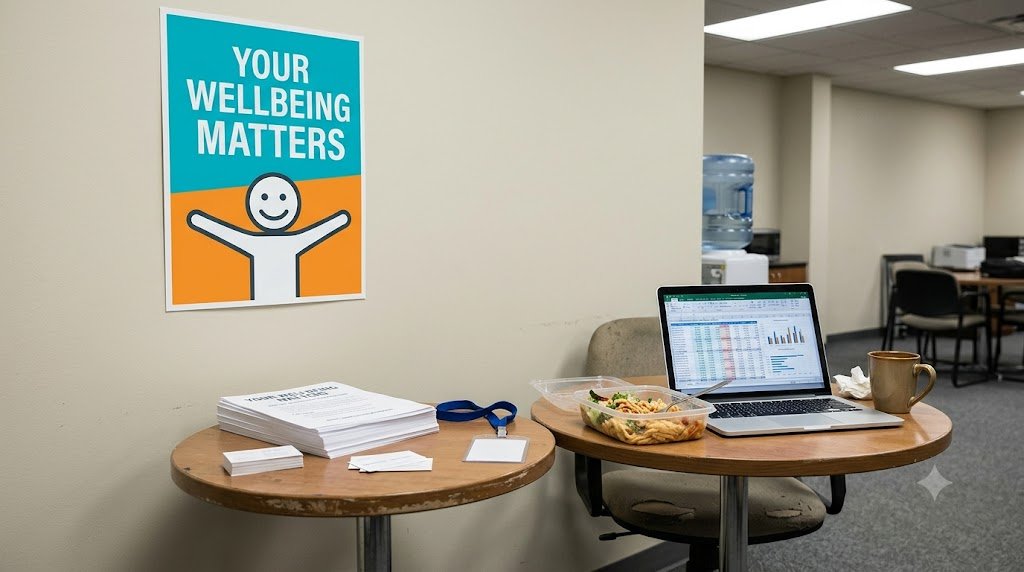
Employees are skeptical of workplace wellness programs when the message doesn’t match daily reality — when an organization talks about wellbeing while the workload, staffing, or leadership behavior actually causing the stress goes unaddressed. As Dr. Charles Castillo puts it, employees lose trust when the organization talks about wellbeing but ignores the daily realities creating stress, and when words and actions don’t align, the program feels like a public relations effort instead of genuine support. Add legitimate privacy fears about who sees an assessment response, and skepticism isn’t irrational — it’s earned.
Why Are Employees Skeptical of Wellness Programs That Are Supposed to Help Them?
Because the message often doesn’t match daily reality. Employees lose trust when an organization talks about wellbeing while workload, staffing, or leadership behavior keep causing the same stress unaddressed — the program reads as public relations, not support. Skepticism deepens further when people worry their responses to an assessment could affect a promotion or performance review. Trust has to be earned structurally and communicated transparently; it can’t be launched.
Expert Insight — Dr. Charles Castillo
“Employees lose trust when the organization talks about wellbeing but ignores the daily realities creating stress. When words and actions don’t align, the program feels like a public relations effort instead of genuine support.”
What Do HR Executives Get Wrong About Building Trust?
The most common error is launching a wellbeing message without addressing the conditions creating the stress in the first place. Culture determines credibility — if employees are overworked, understaffed, or unsupported by leadership, even the best wellbeing program will struggle, because trust is built through everyday leadership, not a single initiative.
The second error is treating a wellness day, app, or workshop as sufficient on its own. Employees don’t want a temporary escape from stress — they want to know the organization is also addressing the sources of it. A wellbeing tool offered instead of structural change doesn’t read as care; it reads as a substitute for it, which is precisely what fuels “wellness-washing” accusations.
Why Is the Business Consequence Larger Than It Looks?
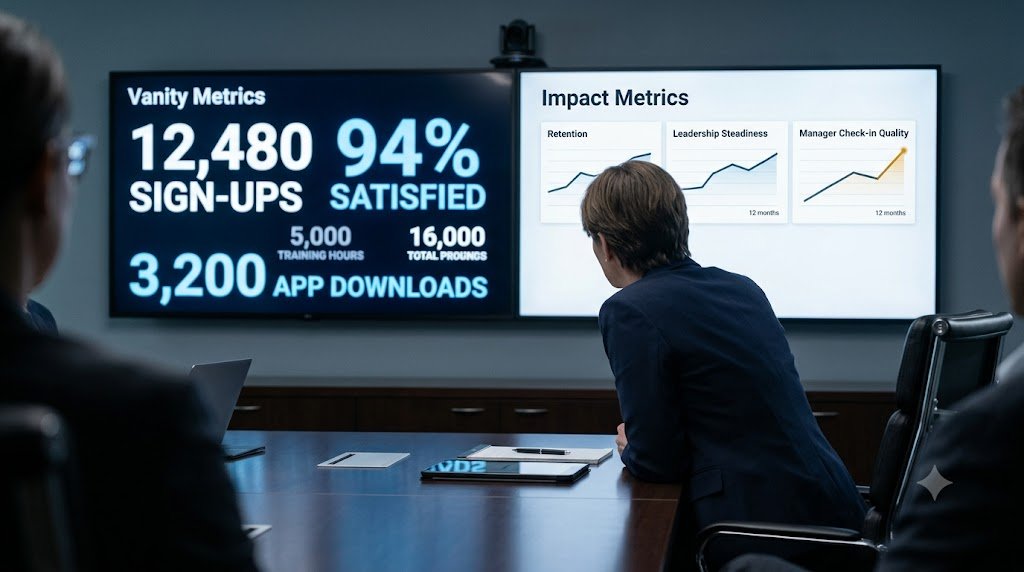
Unaddressed skepticism doesn’t just suppress sign-ups — it corrupts the data HR collects going forward. Many employees worry their responses to a resilience or wellbeing assessment could affect promotions, performance evaluations, or job security, and when people question confidentiality, they participate less honestly, or not at all. A program built on guarded, incomplete answers can’t produce a trustworthy baseline no matter how well it’s designed.
The guidance here is specific and actionable, not abstract. NIOSH’s Supporting Mental Health in the Workplace bulletin (2024) is explicit that workplace risk factors and organizational conditions shape worker mental health, and recommends organizational fixes and supportive supervision alongside any individual resource — not instead of them. OSHA’s guidance for employers similarly recommends identifying and reducing workplace stressors directly, treating resilience supports as a complement to that work, never a replacement for it. And on the privacy question specifically, the EEOC’s model notice language for employer-sponsored wellness programs lays out exactly what transparent disclosure looks like: what’s collected, who has access, how it’s used, and what stays confidential.
What Does THE P.H.O.E.N.I.X. MODEL™ Offer That a One-Day Wellness Event Can’t?
THE P.H.O.E.N.I.X. MODEL™ is not about feeling better for a day. It provides practical skills employees can apply when facing pressure, conflict, uncertainty, and change — and it is explicitly positioned to complement organizational improvements by strengthening the individual’s ability to deal with challenges, not to substitute for fixing the challenges themselves.
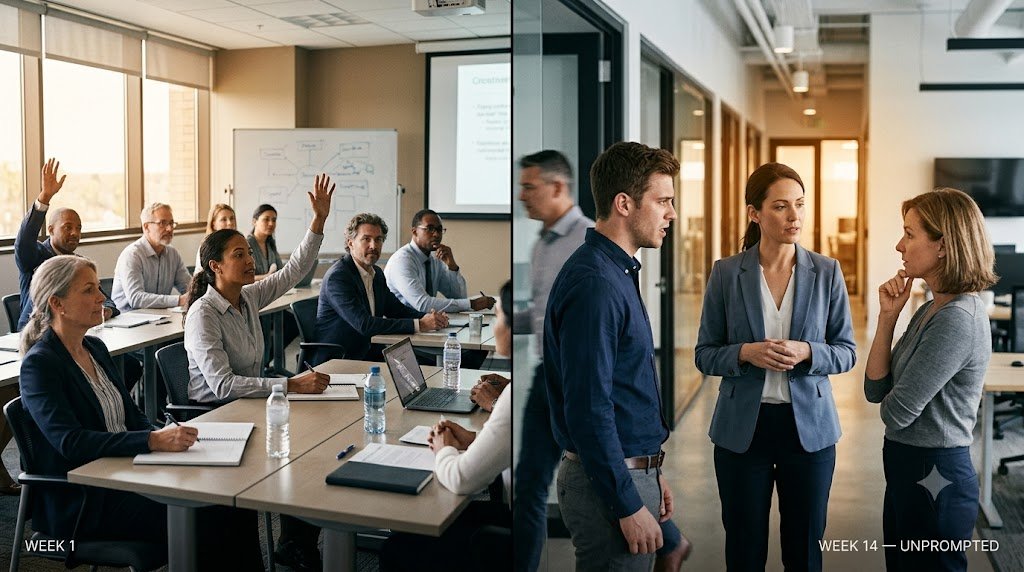
Trust cannot be mandated, which is why voluntary participation matters as much as the content itself. Genuine choice creates an environment where engagement comes from real interest rather than obligation. “When words and actions don’t align, the program feels like a public relations effort instead of genuine support,” Dr. Castillo says — which is exactly why the Anchored Hope Index™ is offered as a strictly voluntary, non-clinical reflection tool rather than something quietly expected.
Wellness-Washing vs. a Genuine Wellbeing Investment
Table 1. What Employees Are Actually Evaluating
| Wellness-Washing Signals | Genuine Investment Signals |
|---|---|
| Messaging without acknowledging real workload | Leadership names the structural problem first |
| Vague or undisclosed data handling | Clear, written explanation of what is collected and by whom |
| Participation implied or lightly pressured | Participation genuinely voluntary, with no penalty for opting out |
| Leaders promote it but don’t use it | Leaders visibly practice and model the behavior |
| Offered instead of structural change | Offered alongside workload, staffing, or leadership change |
Employees read these signals long before they read the program materials. Framing drawn from Dr. Charles Castillo’s Money Dialog answers; disclosure standard per the EEOC’s model notice for employer-sponsored wellness programs.
What Should HR Leaders Do First?
- Name the structural reality before launching anything. If workload or staffing is contributing to stress, say so publicly instead of letting the wellbeing message stand alone — silence on the obvious reads as denial.
- Disclose data handling in plain language. Explain what’s collected, who has access, how it will be used, and what stays confidential, before asking anyone to participate. Trust grows when there are no surprises.
- Make participation genuinely voluntary. Offer a tool like the Anchored Hope Index™ at https://anchoredhopeindex.com and say so explicitly in the invitation — no one is required to take it, and nothing about declining is tracked. Stated plainly, that’s what signals respect for employee choice.
- Have leaders model it first. Leadership must model the change it wants to see; a program leaders don’t visibly use won’t be believed no matter how it’s marketed.
- Address the sources of stress in parallel. Position resilience tools as a complement to workload, staffing, and leadership fixes — never as a substitute for them.
Take the Anchored Hope Index™
Once employees decide a tool can’t be trusted, that suspicion carries forward to the next survey, and the one after that — a single mishandled launch can cost years of data quality. Take the Anchored Hope Index™ at https://anchoredhopeindex.com to see a voluntary, transparent design before you stake your next launch’s credibility on it.
Disclaimer
Disclaimer: The Anchored Hope Index™ is an educational and organizational development tool intended to support reflection, awareness, and discussion. It is not a diagnostic, clinical, or mental health assessment instrument and should not be used as a substitute for professional mental health evaluation or treatment.
Frequently Asked Questions
Why are employees skeptical of wellness programs that are supposed to help them?
Because the message often doesn’t match daily reality. When an organization promotes wellbeing while workload, staffing, or leadership behavior keep causing the same stress unaddressed, the program reads as public relations, not support. Legitimate privacy concerns about assessment data deepen the skepticism further.
What is ‘wellness-washing’ and how do we avoid it?
It’s when a wellbeing message is offered instead of addressing the structural problems causing stress, rather than alongside them. Avoid it by naming workload or staffing issues publicly, and by treating wellbeing tools as a complement to organizational change, never a substitute for it.
What privacy fears do employees commonly have about wellbeing assessments?
Many worry their responses could affect promotions, performance evaluations, or job security. When people question confidentiality, they participate less honestly or not at all — which is why transparent, written disclosure of data handling matters before launch.
What should HR disclose about how assessment data is used?
Explain clearly, before anyone participates, what data is collected, who has access to it, how it will be used, and what remains confidential. The EEOC’s model notice for employer-sponsored wellness programs is a useful template for that disclosure.
Why does voluntary participation matter so much?
Trust cannot be mandated. Voluntary participation shows respect for employee choice and creates an environment where engagement comes from genuine interest rather than obligation — mandated or implied participation undermines the trust the program is trying to build.
Is the Anchored Hope Index™ confidential and non-clinical?
Yes. It is an educational, non-clinical organizational development tool. Individual responses stay private and are reviewed only in aggregate; it does not diagnose burnout or any medical or psychological condition, and participation is voluntary.
Won’t employees just see this as surveillance with better branding?
That fear is reasonable unless the design actively prevents it — individual responses reviewed by no one, aggregate-only reporting, and no tie to any employment decision, stated before anyone participates. Take the Anchored Hope Index™ at https://anchoredhopeindex.com to see that design stated plainly, not just promised.
References
- NIOSH, CDC — Supporting Mental Health in the Workplace, April 15, 2024. https://www.cdc.gov/niosh/bulletin/2024/mental-health-work.html
- Occupational Safety and Health Administration — Workplace Stress: Guidance and Tips for Employers, current OSHA guidance. https://www.osha.gov/workplace-stress/employer-guidance
- U.S. Equal Employment Opportunity Commission — Sample Notice for Employer-Sponsored Wellness Programs, 2016. https://www.eeoc.gov/regulations/sample-notice-employer-sponsored-wellness-programs?renderforprint=1
- Office of the U.S. Surgeon General, U.S. Department of Health and Human Services — Framework for Workplace Mental Health and Well-Being, 2022 (page reviewed January 24, 2025). https://www.hhs.gov/surgeongeneral/reports-and-publications/workplace-well-being/index.html