Participation Isn’t Resilience: How to Tell If Your Wellbeing Program Actually Changed Anything
Dr. Charles Castillo
Mental Resilience Counseling | THE P.H.O.E.N.I.X. MODEL™

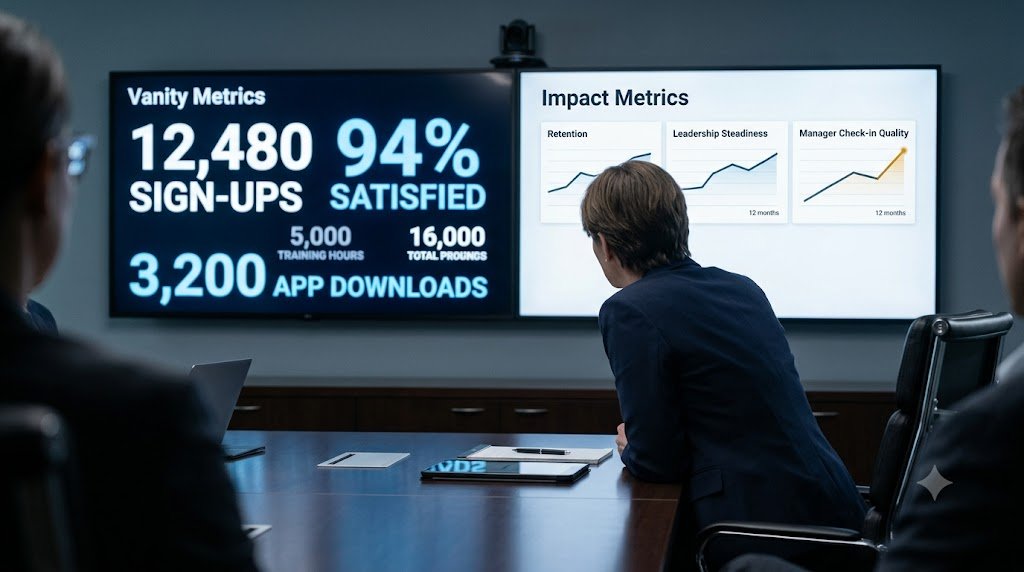
High attendance. Warm feedback. A completion badge for nearly everyone. A program debrief can hit every visible mark and still leave the room quietly unconvinced that anything real changed. That doubt is usually well-founded — participation and resilience are not the same measurement, and treating them as interchangeable is how HR ends up defending a program it cannot actually prove worked.
You know a wellness program is improving resilience, not just generating participation, when you can point to changed behavior under real pressure, sustained months after the program ended — not to attendance. Resilient employees pause before reacting, communicate clearly under stress, solve problems collaboratively, and recover from setbacks without staying stuck. Participation tells you who showed up. As Dr. Charles Castillo puts it, resilience tells you who changed.
How Do I Know Whether Our Wellness Program Is Improving Resilience Rather Than Simply Generating Participation?
Look for changed behavior under pressure, not attendance. Resilience shows up as employees who pause before reacting, communicate clearly under stress, solve problems collaboratively, and recover from setbacks without staying stuck — sustained months after the program ends, not just enthusiasm in the week after it. Participation only tells you who showed up; it says nothing about who is different when pressure actually arrives.
Expert Insight — Dr. Charles Castillo
“Participation tells you who attended. Resilience tells you who changed. Real resilience is demonstrated by how employees think, adapt, and respond when pressure arrives.”
What Do HR Executives Get Wrong About Measuring Resilience?
The most common error is letting attendance stand in for transformation. Attendance measures exposure, not application — just because employees heard the message doesn’t mean they are living it. Transformation is measured by behavior, not by headcount. A workforce can complete every module and behave identically the next time a deadline slips or a conflict flares.
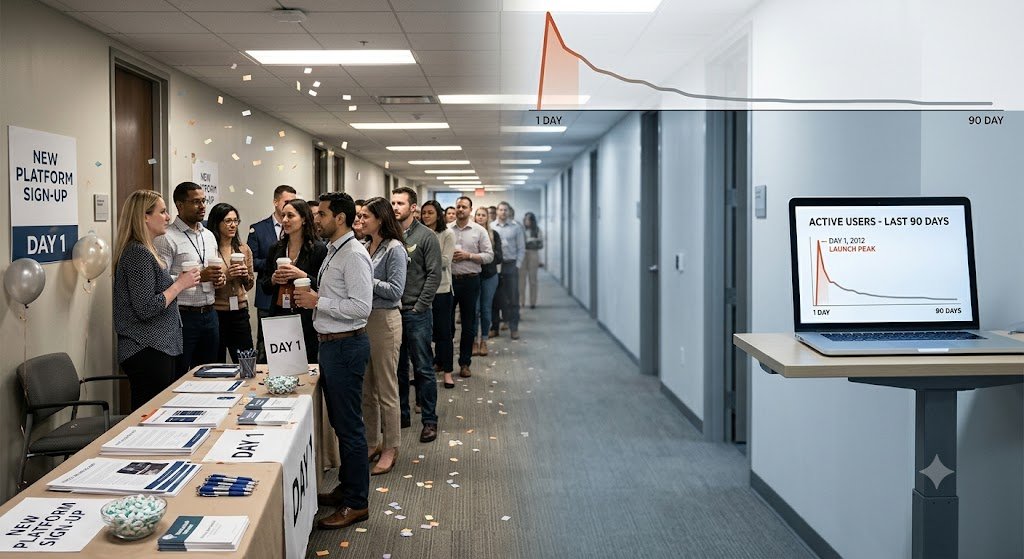
The second error is mistaking a spike in enthusiasm for durable change. Superficial improvement is temporary — it disappears the moment real stress returns. Durable change is different: employees consistently apply healthier responses even during difficult moments, because the skills have become part of how they think and lead, not a script they performed for a facilitator.
Both errors point to the same root cause: measuring the event instead of the aftermath.
Why Is the Business Consequence Larger Than It Looks?
Mistaking participation for resilience doesn’t just produce an inflated report — it leaves the organization blind to whether it is actually more prepared for the next high-pressure quarter than it was before the program started. That’s the real cost: not a wasted budget line, but false confidence going into the moment resilience was supposed to matter.
The evidence supports real caution here. A 2026 systematic review and meta-analysis of participatory organizational interventions (Journal of Occupational Health) found no statistically significant pooled effect overall — a reminder that resilience programs do not automatically work simply because people attended them. The studies that did show real effects shared structured participation and a clear link to workers’ actual needs, not just completion. A companion meta-analysis of work-engagement interventions (Knight, Patterson & Dawson, 2017) makes the same point from a different angle: effects have to be evaluated over time, never assumed from a satisfied room on launch day.
What Does THE P.H.O.E.N.I.X. MODEL™ Reveal That Participation Can’t?
This is fundamentally an Endure problem. THE P.H.O.E.N.I.X. MODEL™ treats resilience as psychological stamina under real pressure, not information absorbed in a session — which means the evidence it looks for lives in how people behave weeks and months later, not in a post-session survey.
The Anchored Hope Index™ adds a dimension ordinary participation metrics miss entirely: future orientation. It shifts the conversation from where employees are today to where they believe they can go tomorrow, prompting reflection on confidence, purpose, and direction — which reveals whether people are actually building the mindset a future high-pressure moment will require. “Real resilience is demonstrated by how employees think, adapt, and respond when pressure arrives,” Dr. Castillo says — an aggregate, non-clinical read on that shift is the closest thing to evidence HR can gather before the next real test arrives.
Participation Signals vs. Resilience Signals
Table 1. What Attendance Shows You vs. What Resilience Actually Looks Like
| Participation Signals | Resilience Signals |
|---|---|
| Session attendance and completion rate | Pausing before reacting under real pressure |
| Post-session satisfaction score | Communicating clearly during a stressful conversation |
| Enthusiasm in the week after the program | Solving problems collaboratively instead of isolating |
| Self-reported confidence right after training | Recovering from a setback without staying stuck |
| Certificates or badges issued | Consistent, steady leadership months after the program ends |
Both columns can be true at once — the left column is not evidence against the right. The point is that only the right column proves the program worked. Framing drawn from Dr. Charles Castillo’s Money Dialog answers.
What Should HR Leaders Do First?
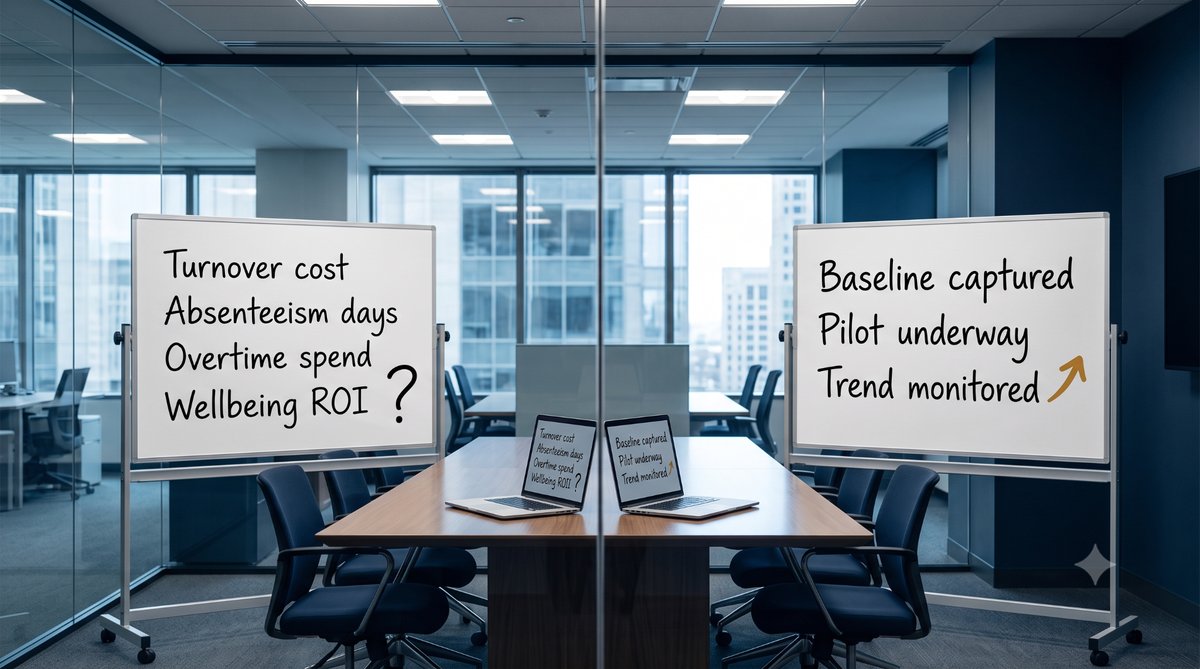
- Set a baseline before the program starts. Capture trust, engagement, resilience, leadership confidence, and team dynamics as they stand today — take the Anchored Hope Index™ at https://anchoredhopeindex.com as the future-oriented piece of that baseline, alongside your operational metrics. You need a real “before” to recognize a real “after.”
- Monitor application during the program, not just attendance. Track whether managers are reinforcing the skills and whether employees are actually using them, not just whether seats are filled.
- Evaluate behavior after the program ends, on a delay. The real test is what people do when a genuine stressor hits weeks or months later — not how they rated the session on the way out.
- Watch for the enthusiasm-fade pattern. If engagement was strong in week one and indistinguishable from baseline by week twelve, that is superficial improvement, not durable change.
- Report honestly, without clinical claims or guarantees. Resilience doesn’t eliminate stress or promise a specific outcome — it equips people to cope more effectively. Say that plainly, and let observable behavior carry the proof.
Take the Anchored Hope Index™
Durable change is only visible months after a program ends — which means if you don’t capture a future-oriented baseline now, you won’t have any way to tell superficial improvement from the real thing when it matters most. Take the Anchored Hope Index™ at https://anchoredhopeindex.com before your next resilience initiative launches.
Disclaimer
Disclaimer: The Anchored Hope Index™ is an educational and organizational development tool intended to support reflection, awareness, and discussion. It is not a diagnostic, clinical, or mental health assessment instrument and should not be used as a substitute for professional mental health evaluation or treatment.
Frequently Asked Questions
How do I know whether our wellness program is improving resilience rather than simply generating participation?
Look for changed behavior under real pressure, sustained months after the program ends — not attendance. Resilient employees pause before reacting, communicate clearly under stress, solve problems collaboratively, and recover from setbacks without staying stuck. Participation only tells you who showed up.
Why doesn’t high attendance prove a resilience program worked?
Attendance measures exposure, not application. Employees can hear a message without living it, and transformation is measured by behavior, not headcount. A fully attended program can still leave the workforce behaving identically under the next real deadline or conflict.
What’s the difference between superficial improvement and durable change?
Superficial improvement is temporary enthusiasm that disappears when real stress returns. Durable change is when employees consistently apply healthier responses even during difficult moments, because the skills have become part of how they think and lead.
What should HR measure before, during, and after a resilience initiative?
Before: a baseline of trust, engagement, resilience, leadership confidence, and team dynamics. During: application and manager reinforcement. After: sustained behavioral change and workforce trends over time — evaluated on a delay, not immediately after the program ends.
Is the Anchored Hope Index™ a clinical measure of resilience?
No. It is an educational and organizational development tool that supports reflection on confidence, purpose, and future direction. It does not diagnose stress, burnout, or any medical or psychological condition, and individual responses stay private.
Can this kind of measurement prove our program caused the improvement?
Be cautious here. A 2026 meta-analysis of participatory organizational interventions found no significant pooled effect overall, meaning resilience programs don’t automatically work just because people attended. Report movement and contribution honestly, not guaranteed causation.
Isn’t this just a fancier satisfaction survey?
No — a satisfaction survey asks how a session felt; this asks how someone sees their own capacity to handle what’s ahead, a forward-looking signal that doesn’t decay the way post-session enthusiasm does. Take the Anchored Hope Index™ at https://anchoredhopeindex.com to see that distinction in the questions themselves.
References
- NIOSH, CDC — Worker Well-Being Questionnaire (WellBQ), Revised May 2024. https://www.cdc.gov/niosh/docs/2021-110/
- NIOSH, CDC — Mission Possible: Measuring Worker Well-Being, June 25, 2021. https://www.cdc.gov/niosh/bulletin/2021/wellbq.html
- Knight, Patterson & Dawson — Building Work Engagement: A Systematic Review and Meta-Analysis Investigating the Effectiveness of Work Engagement Interventions, Journal of Organizational Behavior, 2017. https://pubmed.ncbi.nlm.nih.gov/28781428/
- Effects of Participatory Organizational Interventions on Mental Health and Work Performance: A Systematic Review and Meta-Analysis, Journal of Occupational Health, 2026. https://pubmed.ncbi.nlm.nih.gov/42011932/