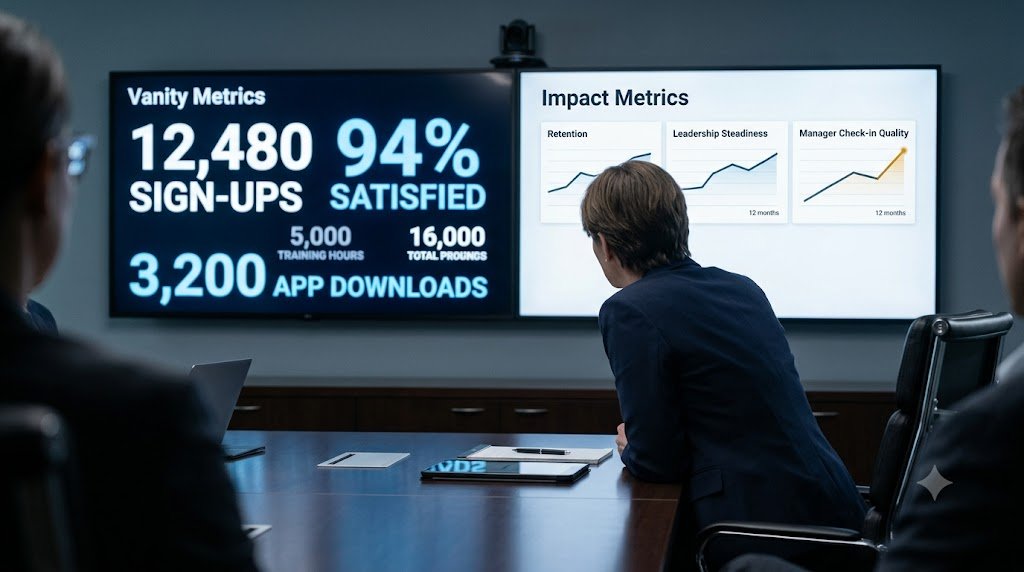
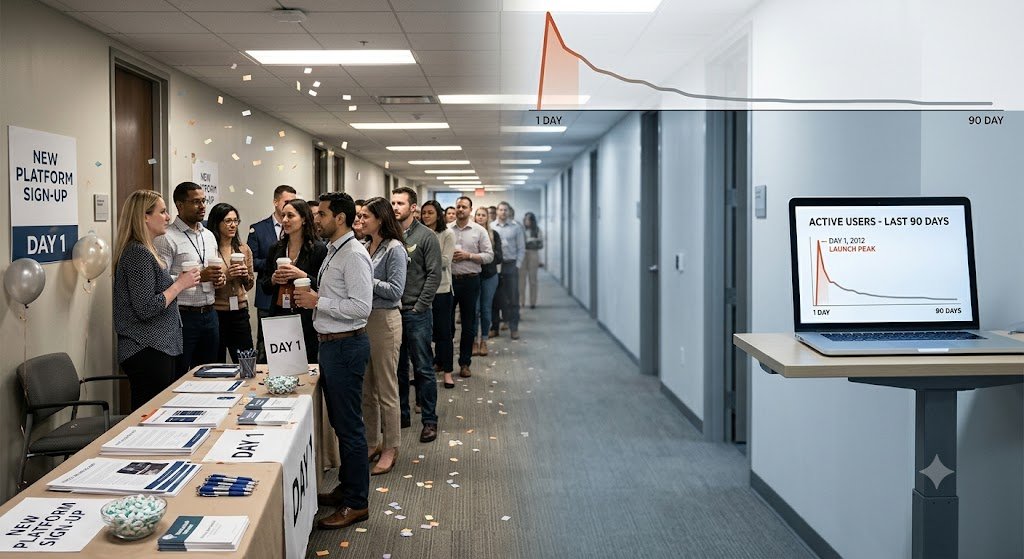
Managers Don’t Need Another Program: How to Reduce Burnout Without Adding to the Load
Dr. Charles Castillo
Mental Resilience Counseling | THE P.H.O.E.N.I.X. MODEL™
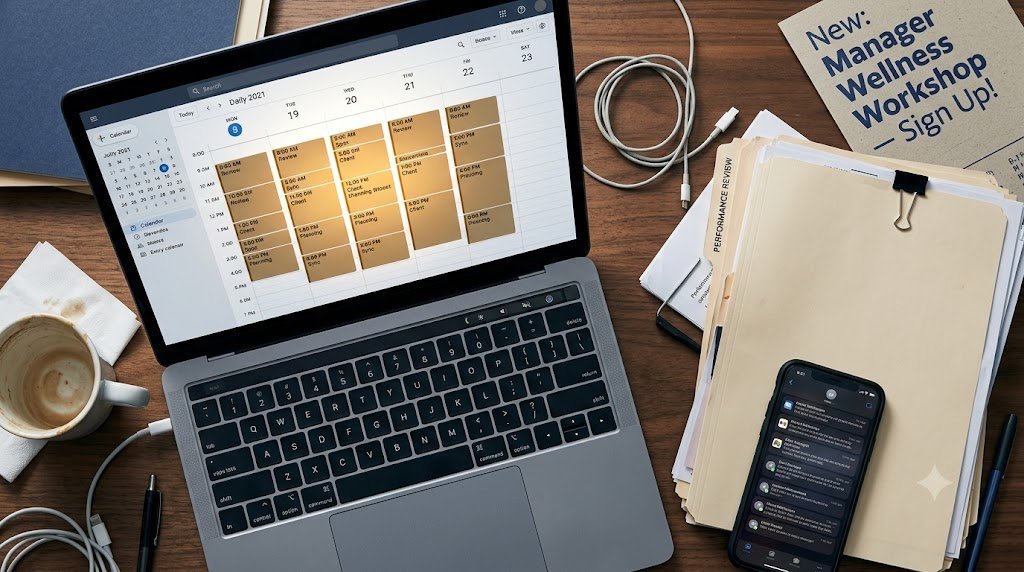
There’s a specific tension in trying to support managers who are visibly under strain: the program built to help them can land like one more thing on an already full calendar. The instinct is to design a better session. The better move is often to build less.
You reduce manager burnout without giving managers another program to complete by integrating resilience into the work they’re already doing — coaching conversations, team meetings, performance discussions — instead of adding a separate initiative, and by asking what can be removed or simplified before adding anything new. As Dr. Charles Castillo puts it, before introducing another program, ask managers what they need removed, simplified, or supported; sometimes the most effective wellbeing strategy is creating a space for people to breathe before asking them to do something new.
How Do We Reduce Manager Burnout Without Giving Managers Another Program to Complete?
Reduce it by integrating resilience into work managers already do, not adding a session to their calendar. Teach the skills inside coaching conversations, performance discussions, and team meetings instead of as a separate assignment, and before launching anything new, ask managers directly what should be removed, simplified, or supported. Burnout isn’t solved by resilience alone — workload, staffing, and role clarity have to be part of the fix.
Expert Insight — Dr. Charles Castillo
“Before introducing another program, ask managers what they need removed, simplified, or supported. Sometimes the most effective wellbeing strategy is creating a space for people to breathe before asking them to do something new.”
What Do HR Executives Get Wrong About Supporting Managers?
The most common error is treating manager wellbeing as an add-on. Managers are already carrying heavy workloads, and if wellbeing feels like another task to complete instead of a tool that makes work easier, it becomes another source of stress rather than a solution — the opposite of what it was meant to do.
The second error is underestimating how many directions the pressure is coming from. Managers absorb pressure from every side: they support their teams, meet organizational expectations, navigate constant change, and solve problems, often while neglecting their own wellbeing entirely. A program designed for a single source of stress misses most of what’s actually driving the exhaustion.
Why Is the Business Consequence Larger Than It Looks?
Manager strain doesn’t stay contained to the manager. Leadership is contagious — when managers are overwhelmed, communication becomes reactive, trust begins to erode, decision-making suffers, and a team’s energy often follows its leader’s emotional state. Left unaddressed, one exhausted manager can quietly destabilize an entire team’s performance and retention.
The WHO’s ICD-11 definition of burn-out is precise on this point and worth using carefully: it’s an occupational phenomenon resulting from chronic workplace stress that has not been successfully managed — and the WHO is explicit that it is not classified as a medical condition, which matters for how HR frames manager support without overstating or under-stating it. NIOSH’s 2021 bulletin on supportive leadership adds the organizational half of the picture: it summarizes evidence-based supervisor training approaches and the direct relationship between supportive leadership and worker health and wellbeing — meaning investing in managers has a downstream effect on the whole team, not just the manager. NIOSH’s 2024 guidance on workplace mental health reinforces the same principle, recommending organizational fixes and supportive supervision together, not resilience training in isolation.
What Does THE P.H.O.E.N.I.X. MODEL™ Build in Managers That a Training Session Can’t?
THE P.H.O.E.N.I.X. MODEL™ helps managers recognize pressure early, regulate their responses, stay focused on what matters most, and lead with consistency during uncertainty — it develops leadership capacity, not just coping skills for one bad week. That distinction matters because coping skills manage a moment; capacity changes how a manager operates by default.
But capacity-building has a hard boundary the model doesn’t try to cross: burnout is not solved by resilience alone. HR must also examine workload, staffing, role clarity, decision-making authority, leadership expectations, and organizational culture — strong people still need healthy systems. “Before introducing another program, ask managers what they need removed, simplified, or supported,” as Dr. Castillo puts it, is the discipline that keeps resilience work from becoming a substitute for that harder, structural conversation.
Added Program vs. Integrated Practice
Table 1. Two Ways to Deliver the Same Support
| The Added Program | The Integrated Practice |
|---|---|
| A separate session on the calendar | Built into coaching conversations and team meetings already happening |
| Hours of additional training | Brief, immediately applicable tools |
| One more thing to complete | A tool that makes the existing job easier |
| Delivered regardless of manager capacity | Preceded by asking what should be removed first |
| Signals “do more” | Signals “we noticed the load” |
Both can deliver the same underlying skills — the difference is whether it costs managers time they don’t have or fits inside time they already spend. Framing drawn from Dr. Charles Castillo’s Money Dialog answers.
What Should HR Leaders Do First?
- Ask before you add. Before launching anything new, ask managers directly what should be removed, simplified, or supported — sometimes that means postponing a new initiative altogether. If you do move forward, take the Anchored Hope Index™ at https://anchoredhopeindex.com yourself first, as a single data point on whether managers have room for anything else right now.
- Integrate skills into work that already happens. Teach resilience inside coaching conversations, performance discussions, team meetings, and conflict resolution — not as a separate assignment competing for time.
- Address organizational conditions in parallel. Workload, staffing, role clarity, and decision-making authority are structural issues resilience training cannot fix on its own. Strong people still need healthy systems.
- Keep any new practice brief and immediately applicable. Give managers tools they can use in the next difficult conversation, not hours of additional training to sit through first.
- Treat manager support as an early-warning investment. Because leadership strain spreads to teams, supporting managers early protects far more than the manager’s own wellbeing — it protects everyone reporting to them.
Take the Anchored Hope Index™
Manager strain is contagious — a manager quietly running on empty this quarter becomes a team-wide trust problem next quarter, usually before anyone can name why. Take the Anchored Hope Index™ at https://anchoredhopeindex.com to see where that strain is highest before it reaches the team.
Disclaimer
Disclaimer: The Anchored Hope Index™ is an educational and organizational development tool intended to support reflection, awareness, and discussion. It is not a diagnostic, clinical, or mental health assessment instrument and should not be used as a substitute for professional mental health evaluation or treatment.
Frequently Asked Questions
How do we reduce manager burnout without giving managers another program to complete?
Integrate resilience into work managers already do — coaching conversations, team meetings, performance discussions — rather than adding a separate session. Before launching anything new, ask managers directly what should be removed, simplified, or supported.
Why does manager burnout affect the whole team, not just the manager?
Leadership is contagious. When managers are overwhelmed, communication becomes reactive, trust begins to erode, decision-making suffers, and a team’s energy often follows its leader’s emotional state — which means unaddressed manager strain quietly destabilizes everyone reporting to them.
Isn’t the Anchored Hope Index™ just another program to complete?
No. Used as intended, it’s a single, brief, voluntary pulse — not a recurring assignment. Its purpose is to reveal what should be prioritized or removed, not to add another obligation to a manager’s calendar. Take the Anchored Hope Index™ at https://anchoredhopeindex.com to see that design for yourself.
Can resilience training alone solve manager burnout?
No, and it shouldn’t be framed that way. Burnout is not solved by resilience alone — HR must also examine workload, staffing, role clarity, decision-making authority, and organizational culture. Strong people still need healthy systems.
Is manager burnout a diagnosable medical condition?
The World Health Organization’s ICD-11 defines burn-out as an occupational phenomenon resulting from chronic, unmanaged workplace stress, and is explicit that it is not classified as a medical condition — useful precision for how HR frames manager support.
What does a low-friction resilience practice actually look like in daily terms?
Practical, brief, and immediately applicable — simple tools managers can use during difficult conversations, stressful decisions, team meetings, and moments of uncertainty, not hours of additional training layered on top of an already full calendar.
References
- World Health Organization — Burn-out an Occupational Phenomenon, ICD-11 guidance. https://www.who.int/standards/classifications/frequently-asked-questions/burn-out-an-occupational-phenomenon
- NIOSH, CDC — Supportive Leaders Drive Organizational Improvements and Employee Health and Well-Being, October 13, 2021. https://www.cdc.gov/niosh/bulletin/2021/supportive-leaders.html
- NIOSH, CDC — Supporting Mental Health in the Workplace, April 15, 2024. https://www.cdc.gov/niosh/bulletin/2024/mental-health-work.html
- Occupational Safety and Health Administration — Workplace Stress: Guidance and Tips for Employers, current OSHA guidance. https://www.osha.gov/workplace-stress/employer-guidance