The Risk Boards Don’t See Yet: How to Present Resilience as an Enterprise Issue, Not an HR Ask
Dr. Charles Castillo
Mental Resilience Counseling | THE P.H.O.E.N.I.X. MODEL™
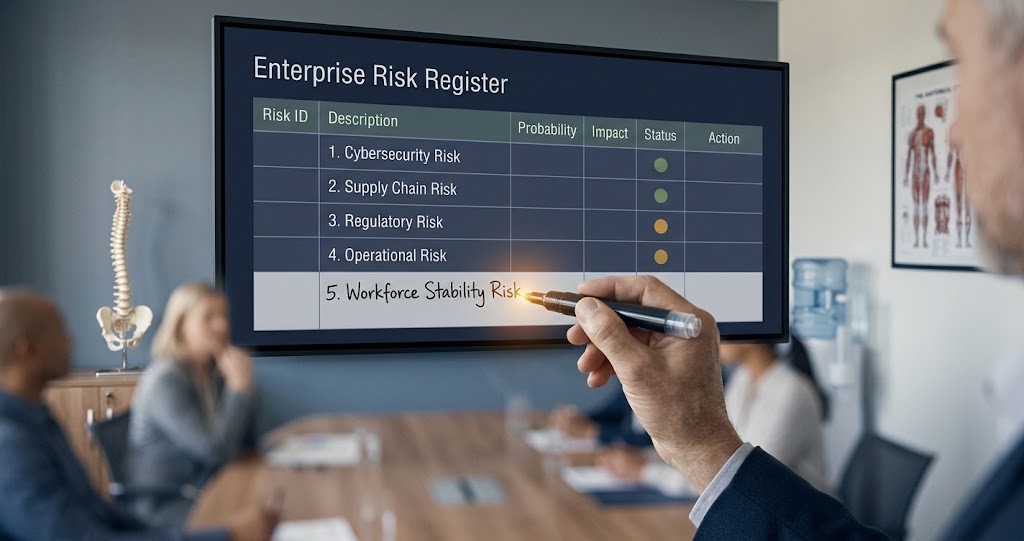
Getting workforce resilience onto a board agenda exposes a mismatch fast: the board speaks in enterprise risk, and the pitch arrives sounding like an HR update. It rarely survives the translation.
You present the financial case for a resilience system to a board by framing it as an enterprise risk, not an employee benefit — naming the specific costs that compound silently before they hit a financial statement, and positioning early-warning measurement as risk mitigation, not sentiment tracking. As Dr. Charles Castillo puts it, boards often underestimate the hidden costs of chronic workforce strain, including declining decision quality, leadership fatigue, reduced productivity, increased turnover, and loss of institutional knowledge — and these risks develop long before they appear on a financial report.
How Do We Present the Financial Case for a Resilience System to Our Board?
Present it as an enterprise risk, not an HR initiative. Translate burnout into the language a board already uses for risk — impacts on performance, retention, productivity, customer experience, and organizational continuity — and name the specific costs that compound silently: turnover, absenteeism, presenteeism, recruitment expense, safety incidents, and leadership disruption. Position early measurement as a leading indicator of risk, not a lagging HR metric.
Expert Insight — Dr. Charles Castillo
“Boards often underestimate the hidden costs of chronic workforce strain, including declining decision quality, leadership fatigue, reduced productivity, increased turnover, and loss of institutional knowledge. These risks develop long before they appear on a financial report.”
What Do HR Executives Get Wrong When Presenting to the Board?
The most common error is presenting resilience as an HR initiative rather than an enterprise risk. Burnout is not simply an employee issue — it is an operational risk that affects performance, retention, productivity, customer experience, and organizational continuity. A board evaluates operational risk differently than it evaluates an HR program request, and the pitch has to match the category it belongs in.
The second error is leaving out the specific compounding costs and speaking in generalities instead. Leaders should name turnover costs, absenteeism, presenteeism, recruitment and onboarding expenses, safety incidents, lower productivity, leadership disruption, and reduced organizational performance explicitly — these costs compound over time if left unaddressed, and a vague “wellbeing matters” narrative doesn’t give a board anything concrete to act on.
Why Is the Business Consequence Larger Than It Looks?
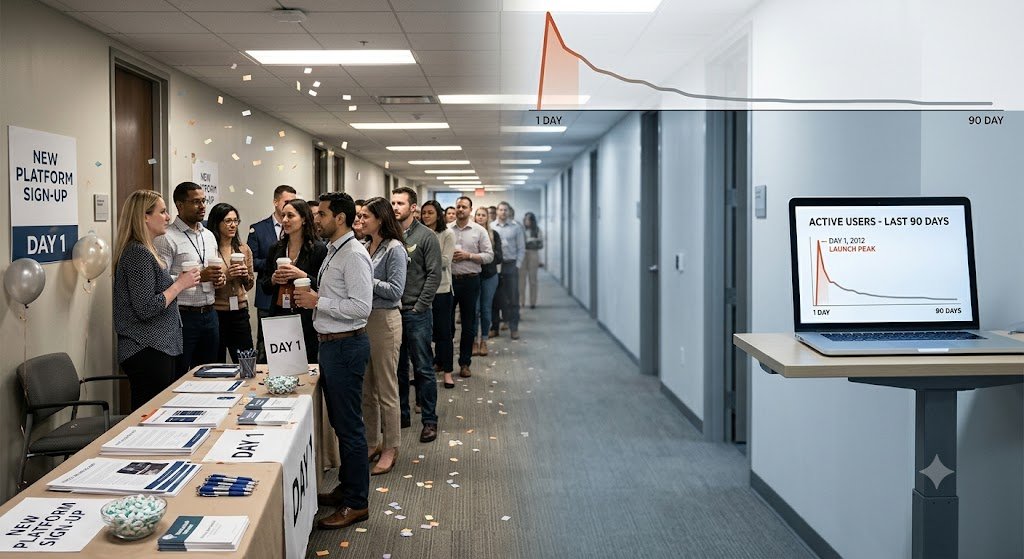
The risks a board misses here aren’t hypothetical — they’re already accumulating, just not yet visible in a quarterly report. By the time declining decision quality or leadership fatigue shows up as a financial line item, the underlying instability has usually been building for months.
NIOSH’s 2024 call to address work-related psychosocial hazards frames chronic workplace stressors explicitly as occupational risks requiring organizational attention — the same register a board already uses for any other operational risk. The U.S. Surgeon General’s Framework for Workplace Mental Health and Well-Being (2022) ties those risks to specific organizational conditions, giving HR concrete language for what the investment actually targets rather than an abstract appeal to wellbeing. At the same time, a RAND review of worksite wellness programs (Osilla et al., 2012) found that much of the reported return in this field rests on observational rather than randomized evidence — a reason to present the case with precision and avoid promising a board more certainty than the evidence supports. And the WHO’s ICD-11 definition of burn-out, explicitly not classified as a medical condition, gives the presentation clean, non-clinical language a board can act on without confusing workforce strain with a liability or compliance issue.
How Does the Anchored Hope Index™ Change What a Board Can See Before It’s Too Late?
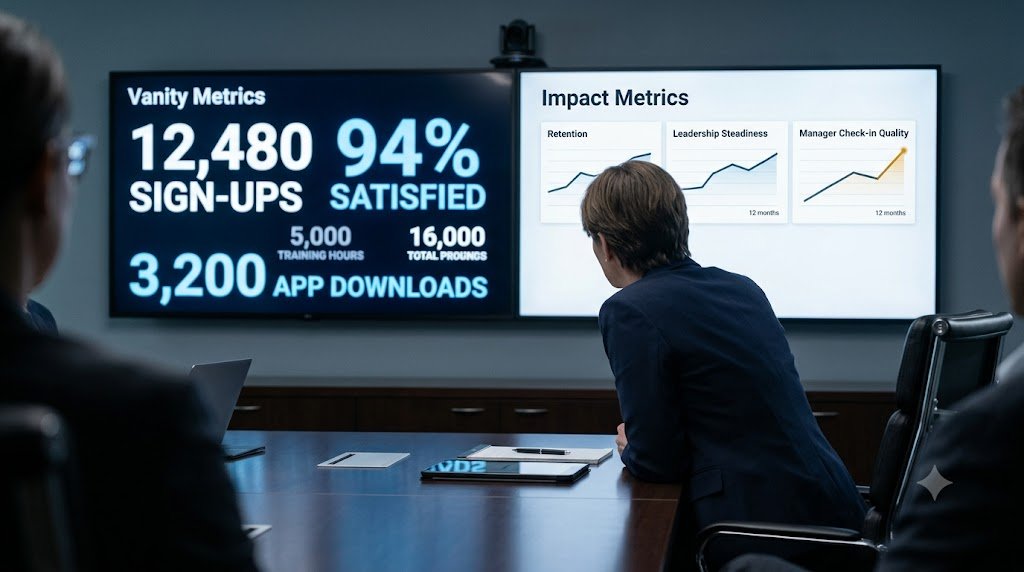
The Anchored Hope Framework shifts the conversation from reacting to turnover to predicting stability. The Anchored Hope Index™ gives leaders an early indicator of whether employees and leaders remain connected to the meaningful future that keeps them steady through adversity, allowing organizations to strengthen resilience before operational performance begins to decline.
That shift from reactive to predictive is the entire pitch to a board, condensed into one instrument. “These risks develop long before they appear on a financial report,” as Dr. Castillo puts it — and a leading indicator is precisely what lets a board see the risk while it’s still cheap to address, instead of discovering it once it’s already a line item.
Reactive Reporting vs. Predictive Risk Framing
Table 1. Two Ways to Bring Workforce Risk to the Board
| Reactive Reporting | Predictive Risk Framing |
|---|---|
| Turnover reported after resignations spike | Stability tracked as a leading indicator before resignations spike |
| Framed as an HR metric | Framed as an enterprise risk, alongside cybersecurity or supply chain |
| Reviewed once a year in an HR update | Reviewed as part of ongoing risk governance |
| Costs discovered after they’ve compounded | Costs named upfront: turnover, absenteeism, presenteeism, recruiting, safety, leadership disruption |
| Board asks “why didn’t we see this coming” | Board sees the early signal before it becomes a crisis |
Both describe the same underlying workforce condition — only one gives the board time to act before it costs more. Framing drawn directly from Dr. Charles Castillo’s Money Dialog answers.
What Should HR Leaders Do First?
- Translate the issue into enterprise-risk language before the meeting. Burnout is not simply an employee issue — describe it as an operational risk affecting performance, retention, productivity, customer experience, and continuity, in exactly those terms, before you walk into the room.
- Name every specific compounding cost explicitly. Turnover, absenteeism, presenteeism, recruitment and onboarding expense, safety incidents, lower productivity, and leadership disruption — leaving any of these out makes the case easier to dismiss as vague.
- Frame the Anchored Hope Index™ as a leading indicator, not a lagging report. Take the Anchored Hope Index™ at https://anchoredhopeindex.com and present it the way you’d present any other early-warning risk signal — a number the board checks before the risk materializes, not after.
- Keep claims honest and non-clinical. Avoid overpromising causation or certainty a skeptical board will test — precision protects credibility better than confidence does.
- Bring the hidden-cost list to every board conversation, not just the first one. Repetition builds board fluency in this framing over time, so the case gets easier to make in each successive meeting, not harder.
Take the Anchored Hope Index™
By the time workforce instability shows up in a financial report, the cheapest window to intervene has already closed — the board ends up reacting to a crisis instead of reviewing a risk. Take the Anchored Hope Index™ at https://anchoredhopeindex.com to put a leading indicator in front of your board before the lagging one forces the conversation.
Disclaimer
Disclaimer: The Anchored Hope Index™ is an educational and organizational development tool intended to support reflection, awareness, and discussion. It is not a diagnostic, clinical, or mental health assessment instrument and should not be used as a substitute for professional mental health evaluation or treatment.
Frequently Asked Questions
How do we present the financial case for a resilience system to our board?
Frame it as an enterprise risk, not an HR initiative. Translate burnout into the language of performance, retention, productivity, and continuity, name the specific compounding costs explicitly, and position early measurement as a leading indicator rather than a lagging HR report.
What workforce risks do boards typically underestimate?
The hidden costs of chronic workforce strain — declining decision quality, leadership fatigue, reduced productivity, increased turnover, and loss of institutional knowledge. These risks develop long before they appear on a financial report.
What costs should never be left out of this conversation?
Turnover costs, absenteeism, presenteeism, recruitment and onboarding expenses, safety incidents, lower productivity, leadership disruption, and reduced organizational performance. These compound over time if left unaddressed.
Won’t the board just see this as another HR ask dressed up in risk language?
Not if the framing matches how the board already treats other enterprise risks — named costs, an early-warning indicator, and language drawn from risk governance rather than HR reporting. Take the Anchored Hope Index™ at https://anchoredhopeindex.com to see it positioned exactly as a leading risk indicator would be, not as a program pitch.
How does the Anchored Hope Index™ change what a board can act on?
It shifts the conversation from reacting to turnover to predicting stability, giving leaders an early indicator of whether employees and leaders remain connected to a meaningful future — before operational performance begins to decline.
Is the Anchored Hope Index™ a clinical or diagnostic tool the board should treat as a liability signal?
No. It is an educational and organizational development tool that supports reflection and trend awareness. It does not diagnose burnout or any medical or psychological condition, and framing it otherwise to a board would overstate what it does.
References
- NIOSH, CDC — An Urgent Call to Address Work-Related Psychosocial Hazards and Improve Worker Well-Being, April 10, 2024. https://www.cdc.gov/niosh/bulletin/2024/workplace-psychosocial-hazards.html
- Office of the U.S. Surgeon General, U.S. Department of Health and Human Services — Framework for Workplace Mental Health and Well-Being, 2022 (page reviewed January 24, 2025). https://www.hhs.gov/surgeongeneral/reports-and-publications/workplace-well-being/index.html
- Osilla et al. — Systematic Review of the Impact of Worksite Wellness Programs, RAND / American Journal of Managed Care, 2012. https://pubmed.ncbi.nlm.nih.gov/22435887/
- World Health Organization — Burn-out an Occupational Phenomenon, ICD-11 guidance. https://www.who.int/standards/classifications/frequently-asked-questions/burn-out-an-occupational-phenomenon