What Happens to Performance When Hope Starts to Fade?
Dr. Charles Castillo
Mental Resilience Counseling | THE P.H.O.E.N.I.X. MODEL™

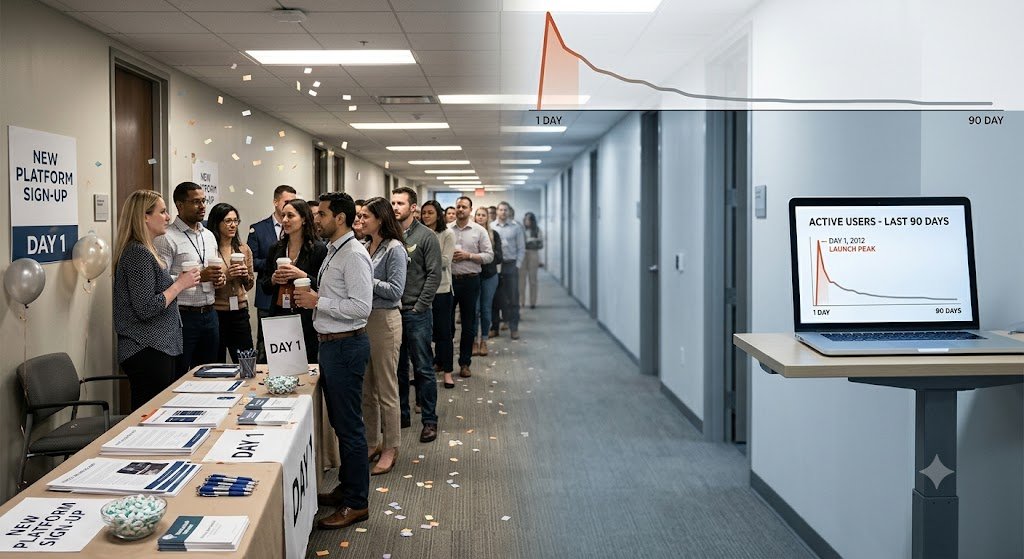
Performance rarely collapses the moment hope fades. That is what makes the problem so easy to miss. In the early stage, people may still work hard. They may still hit deadlines and maintain appearances. But performance starts to change in subtler ways. Initiative narrows. Creativity drops. Patience shortens. Recovery slows. The person becomes more mechanical and less generative. They may still function, but with less internal force behind the same output. (Wall Street Journal)
This matters because organizations often measure performance only after the deeper shift has already begun. Burn-out research has long pointed to exhaustion, mental distance, and reduced efficacy as interconnected. In practical terms, that means hope and future orientation are not abstract extras. They influence how much resilience, judgment, and discretionary effort a person can still bring to the work. When that future connection weakens, performance may remain technically acceptable while becoming thinner and more fragile. (Business Insider)
Drawing from the PHOENIX Model, Dr. Charles Castillo identifies Anchored Hope as a clinical resilience factor influencing engagement, endurance, and workplace stability. That framing clarifies why fading hope affects performance so deeply. Hope is not simply optimism. It is the felt bond between present effort and a meaningful future. When that bond weakens, the work often becomes harder to sustain with the same steadiness and inner commitment.
Teams feel this quickly. A leader who once stabilized others may become more reactive. A strong employee may start conserving effort instead of contributing fully. A team may still execute, but with less resilience and less willingness to invest beyond what is required. Gallup’s manager engagement findings reinforce that when the leadership layer weakens, the performance layer often follows. (Business Insider)
The Anchored Hope Index™ is designed to help individuals and organizations reflect on future orientation, meaning, resilience, support, and drift risk before the fading of hope becomes visible only through performance decline, disengagement, or turnover.
If you want a more structured way to understand whether performance is being quietly weakened by fading hope and direction, the Anchored Hope Index™ offers a thoughtful place to begin.
Educational Use Disclaimer: The Anchored Hope Index™ is an educational and organizational development tool intended to support reflection, awareness, and discussion. It is not a diagnostic, clinical, or mental health assessment instrument and should not be used as a substitute for professional mental health evaluation or treatment.
References:Research on emotional intelligence, trust, and team effectiveness. (arXiv)Gallup manager engagement findings, as reported by Business Insider and The Wall Street Journal. (Business Insider)