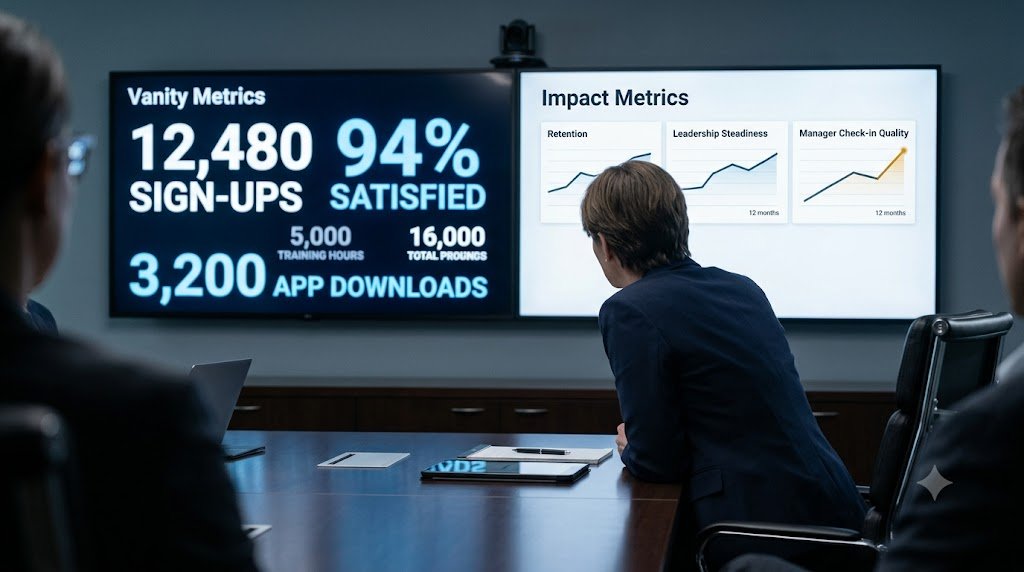
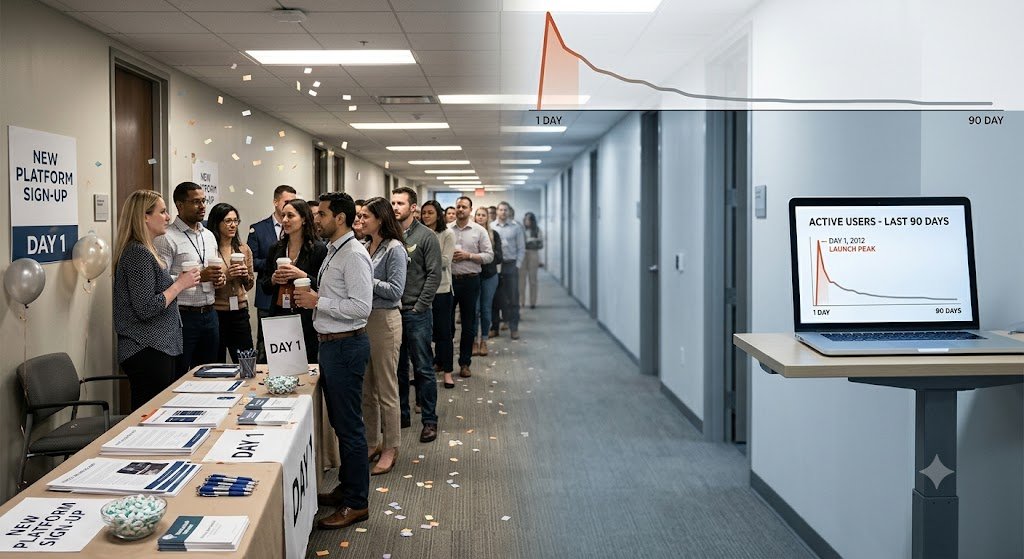
Why Participation Is Not Proof: How to Know Whether Resilience Actually Improved After an Intervention
Dr. Charles Castillo
Mental Resilience Counseling | THE P.H.O.E.N.I.X. MODEL™
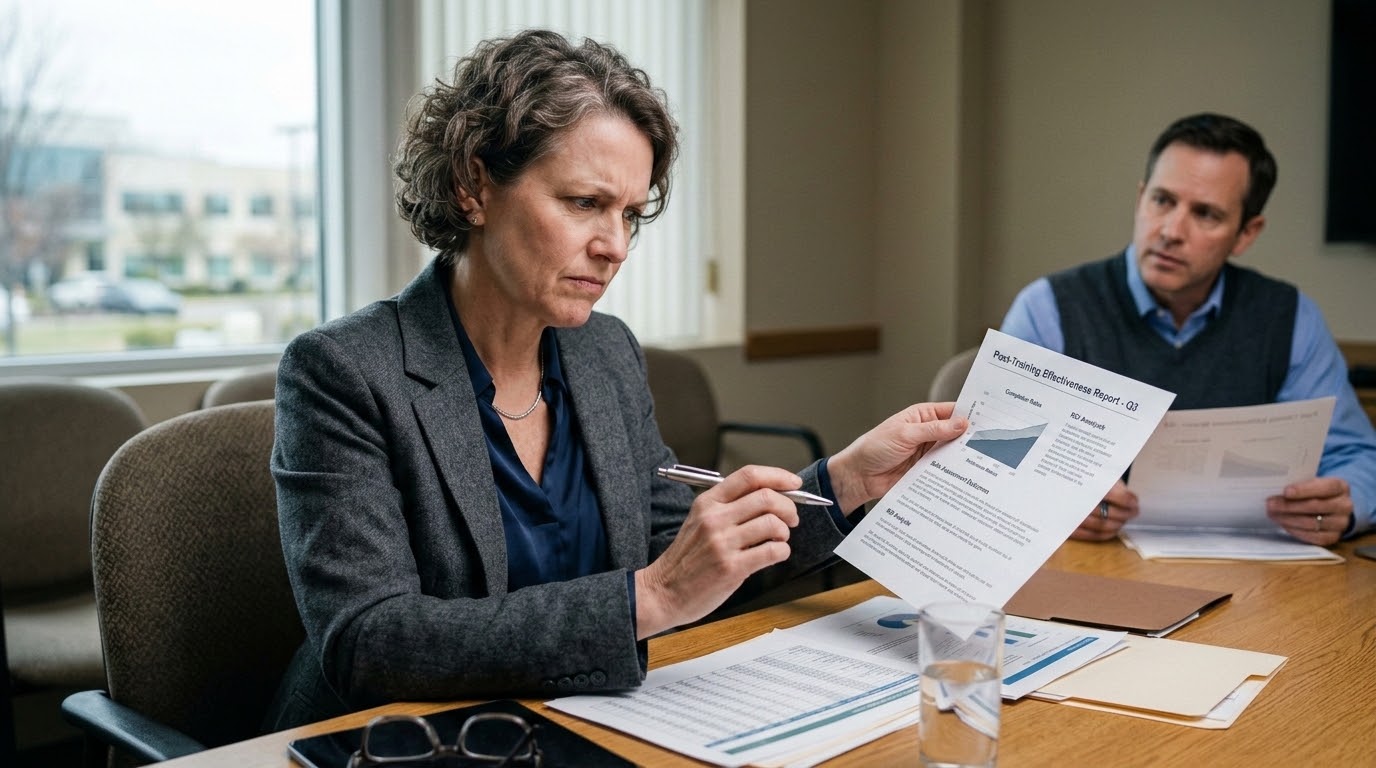
A resilience program wraps up. The attendance sheet is full. The post-training survey comes back with strong satisfaction scores. Everyone in the room agrees it was a good use of time.
And then, six months later, a CFO asks a question that stops the conversation cold: did any of that actually change anything?
That question — Can we measure the resilience improvement of a workforce post-intervention? — is one of the most important ones an organization can ask, and one of the most poorly answered. Most leaders default to attendance and satisfaction because those numbers are easy to collect. They're also, on their own, close to meaningless.
What Leaders Often Misunderstand
Meaningful improvement is not measured by how people feel immediately after training. It is measured by how they perform when the next challenge arrives.
Attendance tells you who participated. Satisfaction tells you whether they liked it. Neither tells you whether resilience improved. A resilient workforce communicates more effectively, adapts more quickly, makes better decisions under pressure, and recovers faster from adversity. The real question is not, "Did people enjoy the program?" It is, "Did the organization become stronger because of it?"
This distinction matters because the two questions can produce completely different answers. A well-run, well-received training session can still leave an organization exactly as fragile as it was before — if what people learned never showed up in how they actually behave under pressure three months later.
Why This Problem Is Bigger Than It Looks
The gap between activity and transformation isn't just a measurement inconvenience — it has real financial consequences. Gallup's research has consistently tied employee engagement to productivity, profitability, and sales. If a resilience initiative doesn't move the underlying conditions that drive engagement, it may look successful on a post-training survey while leaving those business outcomes untouched.
The U.S. Surgeon General's framework for workplace well-being points to safety, trust, communication, and connection as foundational conditions for a healthy workforce. Those are exactly the kinds of things that show up in how a team functions weeks after a program ends — not in how many people showed up for it. If your measurement stops at the classroom door, you're only capturing a fraction of the picture.
The biggest mistake organizations make is measuring activity instead of transformation. They celebrate participation before ever evaluating behavior. That's an understandable instinct — attendance and satisfaction data are immediate and easy to report up the chain. Real behavioral change takes longer to observe and requires a more deliberate measurement plan. But skipping that step means you're funding programs on faith, not evidence.
What THE P.H.O.E.N.I.X. MODEL™ Sees Earlier
The Anchored Hope Index™ complements operational measures by providing a non-clinical, educational assessment of resilience capacity and workforce stability. It helps leaders understand whether employees still have something meaningful to hold onto while moving through uncertainty — which is the real test of whether a resilience intervention worked.
Temporary motivation often fades when the next crisis appears. Anchored Hope™ is different because it is future-focused. It reflects whether people have identified a meaningful purpose, direction, or goal that helps them continue moving forward despite adversity. Buoyancy helps people stay afloat during difficult moments. Anchored Hope™ gives them something worth swimming toward — and that distinction helps leaders determine whether resilience is lasting or simply temporary enthusiasm that will fade by the next hard quarter.
THE P.H.O.E.N.I.X. MODEL™ provides a seven-phase roadmap that allows leaders to monitor progress over time, rather than treating a single training event as the finish line. Leaders first Perceive change, Harmonize teams, Orient around purpose, Endure challenges, iNtegrate new behaviors, Inspire others, and ultimately eXcel through sustained organizational resilience. Lasting change is measured through consistent behavior, not one successful event.
What to Measure Instead of Attendance and Satisfaction
The graphic below is worth sharing with anyone who signs off on a resilience or training budget. It separates what's easy to measure from what actually proves something changed.
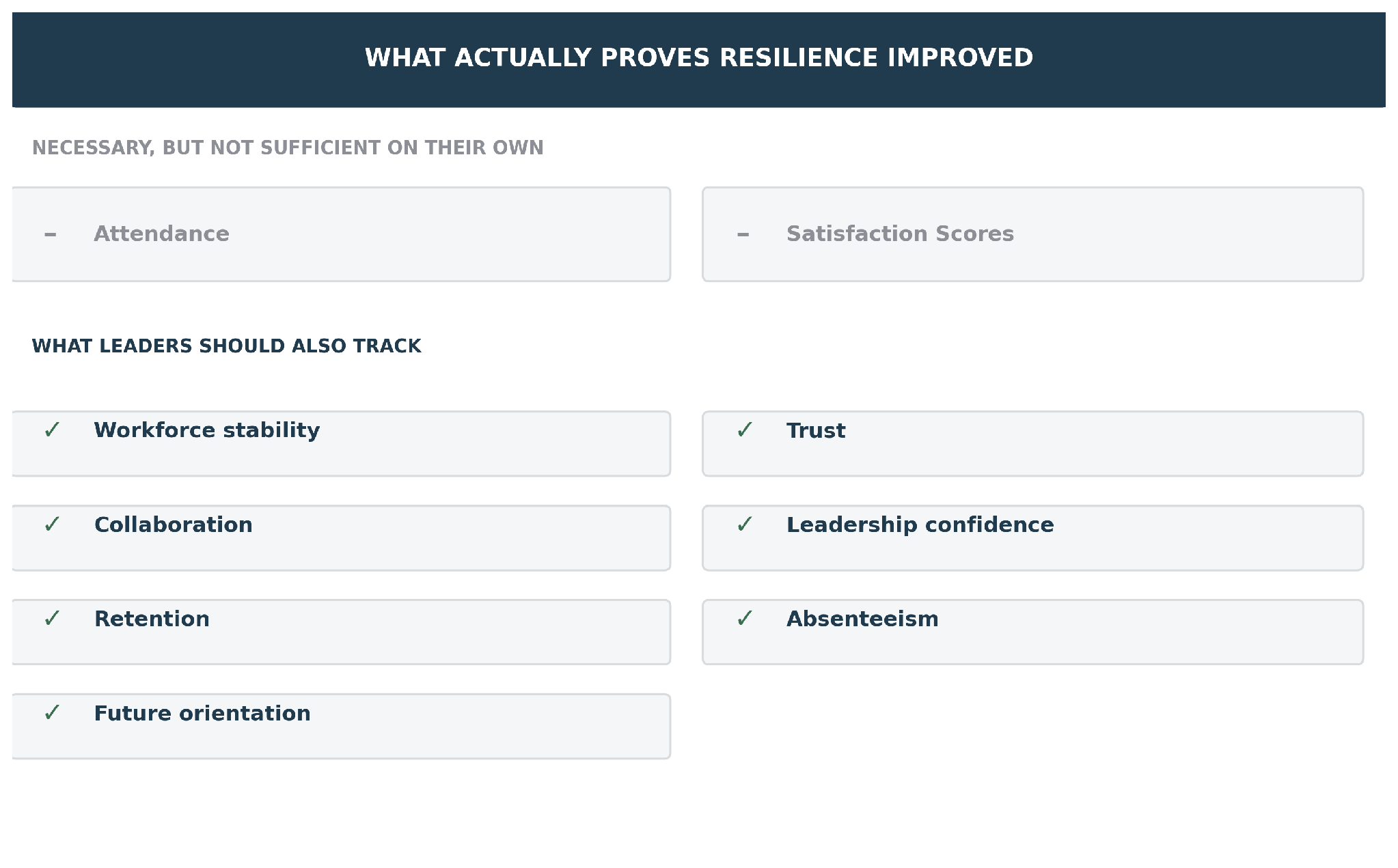
Figure 1. Attendance and satisfaction are necessary to track, but not sufficient on their own to prove resilience improved.
What Leaders Should Do First
If your organization is planning — or has already run — a resilience initiative, don't wait until the year-end report to figure out whether it worked.
- Establish a baseline before the intervention begins, using retention, absenteeism, engagement, leadership observations, and a forward-looking assessment like the Anchored Hope Index™.
- Track behavior, not just attendance — communication patterns, collaboration, and decision-making under pressure, observed over weeks and months, not just on the last day of training.
- Revisit the same measures 60 to 90 days later to see whether the initial signal held or faded, since temporary motivation often fades once the next crisis appears.
- Treat the Anchored Hope Index™ as a complement to operational data, not a replacement for it — resilience shows up in both the numbers and in whether people still believe they have a future worth investing in.
Proving resilience improved isn't about generating an impressive-looking post-training report. It's about being able to say, months later, that people are communicating better, adapting faster, and recovering more quickly than they were before — with evidence to back it up.
Take the Anchored Hope Index™
If you've invested in a resilience or training initiative and aren't sure whether it actually changed anything, that uncertainty is worth resolving. Take the Anchored Hope Index™ to get a clearer, evidence-based read on workforce stability, trust, and future orientation before and after your next intervention.
Educational Use Disclaimer: The Anchored Hope Index™ is an educational and organizational development tool intended to support reflection, awareness, and discussion. It is not a diagnostic, clinical, or mental health assessment instrument and should not be used as a substitute for professional mental health evaluation or treatment.
Frequently Asked Questions
Can we measure the resilience improvement of a workforce post-intervention?
Yes, but not through attendance or satisfaction scores alone. Meaningful measurement requires tracking behavior over time — communication, collaboration, decision-making under pressure — alongside a forward-looking assessment like the Anchored Hope Index™.
Why aren't attendance and satisfaction scores enough on their own?
Attendance tells you who participated. Satisfaction tells you whether they liked it. Neither tells you whether the organization became more resilient, because that requires observing how people actually perform when the next challenge arrives.
What metrics matter beyond attendance and satisfaction?
Workforce stability, trust, collaboration, leadership confidence, retention, absenteeism, and future orientation. These reflect whether resilience actually changed how people function, not just how they felt on the last day of a program.
How soon after an intervention should results be measured?
Consider revisiting your baseline measures 60 to 90 days after the intervention, since temporary motivation often fades once the next crisis appears. Lasting change shows up in sustained behavior, not immediate post-training enthusiasm.
How does the Anchored Hope Index™ help prove resilience improved?
It complements operational measures by providing a non-clinical, educational assessment of resilience capacity and workforce stability, helping leaders see whether recovery is real and lasting or simply temporary enthusiasm.
What is the biggest mistake organizations make when evaluating a resilience program?
Measuring activity instead of transformation — celebrating participation before ever evaluating whether behavior actually changed in the weeks and months that followed.
Can the Anchored Hope Index™ diagnose whether an employee's resilience improved?
No. The Anchored Hope Index™ is an educational and organizational development tool. It supports reflection on resilience capacity and workforce stability, but it does not diagnose burnout or any medical or psychological condition.
What should leaders establish before launching a resilience initiative?
A baseline using retention, absenteeism, engagement, leadership observations, and a forward-looking assessment like the Anchored Hope Index™, so there's something concrete to compare results against later.
References
- Gallup — "State of the Global Workplace 2026," on the link between engagement, productivity, profitability, and sales (gallup.com/workplace/349484/state-of-the-global-workplace.aspx)
- U.S. Department of Health and Human Services, Office of the Surgeon General — "Workplace Mental Health & Well-Being," on safety, trust, and connection as foundational conditions (hhs.gov/surgeongeneral/priorities/workplace-well-being)
- Buvik and Tkalich — "Psychological Safety in Agile Software Development Teams: Work Design Antecedents and Performance Consequences" (arxiv.org/abs/2109.15034)
- Kasperczuk et al. — "The role of work-life balance in effective business management," 2025 (arxiv.org/abs/2510.05783)
- Deep Market Intelligence Report: Enterprise Positioning for THE P.H.O.E.N.I.X. MODEL™ and the Anchored Hope Framework (internal source material)