How Do You Tell the Difference Between Stress, Burnout, and Disengagement?
Dr. Charles Castillo
Mental Resilience Counseling | THE P.H.O.E.N.I.X. MODEL™
Not every struggling employee is burned out.
That may sound obvious, but in practice, many organizations use the same word for very different human conditions. Someone is tired, so people call it burnout. Someone is emotionally flat, so people call it burnout. Someone has stopped caring, and again the word used is burnout. The problem is that stress, burnout, and disengagement can overlap on the surface while pointing to very different forms of strain underneath.
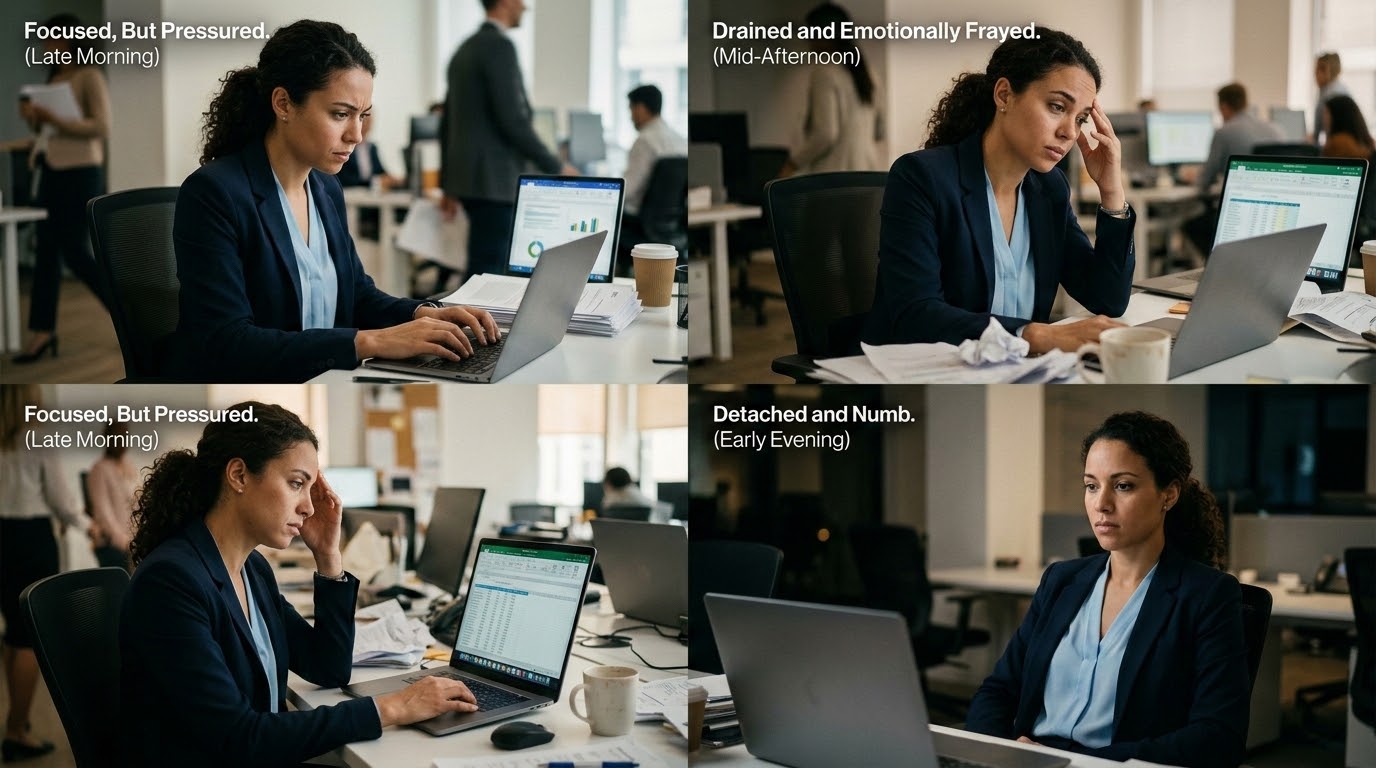
Stress is usually the earliest and most familiar condition. A stressed person often still cares. They may be overwhelmed, pressured, or mentally crowded, but their connection to the work is still alive. They are burdened, not absent. Many stressed people remain deeply invested. They still want to do well. They still feel responsible. They may need support, relief, and recovery, but their internal bond to the work and the future is still present.
Burnout is different. The World Health Organization describes burnout as an occupational phenomenon resulting from chronic workplace stress that has not been successfully managed, with dimensions that include exhaustion, mental distance or cynicism, and reduced professional efficacy. In practical workplace language, burnout often means the person still cares, but caring has become heavier. The cost of continuing has increased.
Disengagement is different again. A disengaged person has often lost connection rather than simply energy. They may still do the minimum. They may still show up. But the work has become emotionally distant. Their effort is no longer tied to meaning, direction, or personal investment in the same way. Stress says, "I am carrying too much." Burnout says, "I cannot keep carrying this the way I have been." Disengagement says, "I am no longer inwardly connected to this."
Why the Difference Matters
That is why the difference matters. A stressed employee may benefit from workload adjustment and recovery. A burned out employee may need deeper restoration, steadier support, and a reassessment of how they are carrying pressure. A disengaged employee may need help reconnecting to meaning, purpose, future direction, or a reason their effort still matters.
From the outside, though, these states can look deceptively similar. All three may involve lower energy, shorter patience, weaker enthusiasm, or reduced emotional availability. The person looks "off," but leaders do not know whether the issue is overload, depletion, or disconnection. If they guess wrong, they may provide rest when meaning is the real problem, or motivation talks when exhaustion is the real problem.
Drawing from the PHOENIX Model, Dr. Charles Castillo identifies Anchored Hope as a clinical resilience factor influencing engagement, endurance, and workplace stability. In this context, the sharper question becomes: is the person still anchored to a meaningful future? A stressed person often is. A burned out person may still be, but that connection is under strain. A disengaged person may be losing it.
That is where the Anchored Hope Index™ becomes valuable. It offers a structured, non-clinical way to reflect on meaning, future orientation, resilience, and drift risk so leaders and individuals can better understand what kind of state they are actually dealing with. It helps clarify whether someone is pressured, depleted, or becoming disconnected from the future that once made the work feel worth carrying.
Because the right response depends on seeing the difference clearly.
Research context: WHO's ICD-11 framing distinguishes burnout as chronic workplace stress, while engagement research from Gallup continues to show that many organizations are struggling with attachment, energy, and workplace connection.
If you want a more structured way to distinguish between strain, burnout, and deeper disengagement, the Anchored Hope Index™ offers a thoughtful place to begin.
Educational Use Disclaimer: The Anchored Hope Index™ is an educational and organizational development tool intended to support reflection, awareness, and discussion. It is not a diagnostic, clinical, or mental health assessment instrument and should not be used as a substitute for professional mental health evaluation or treatment.