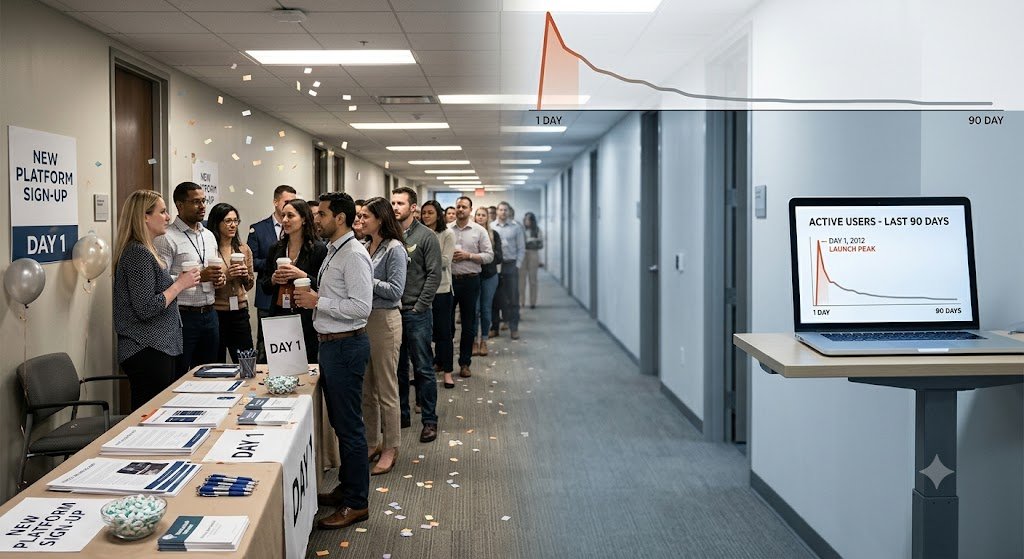
The CFO Wants a Number: How to Defend a Wellbeing Budget Without Overpromising One
Dr. Charles Castillo
Mental Resilience Counseling | THE P.H.O.E.N.I.X. MODEL™
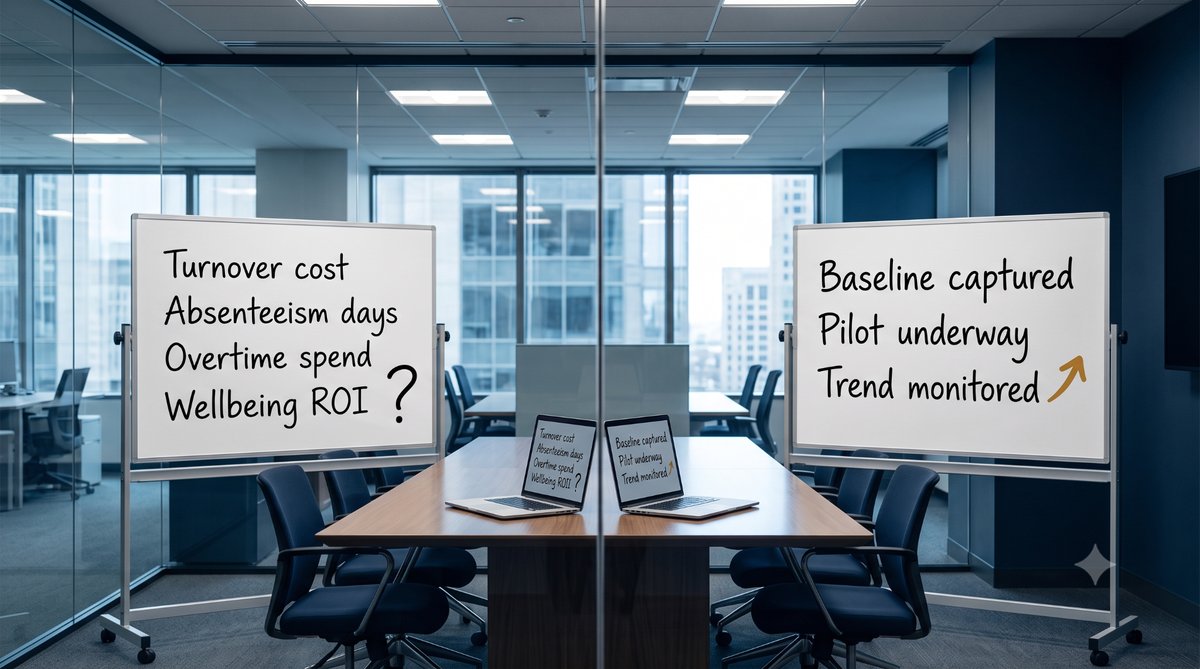
A CFO doesn’t want a philosophy. They want a number — and facing that demand, the instinct is to either retreat into soft language about morale and culture, or overreach with a promised return the program can’t actually guarantee. Both approaches lose the room.
You defend a wellbeing budget to a CFO who wants hard ROI by treating the request like any other capital ask: a disciplined strategy, a real baseline, and measurable movement — not a plea for goodwill. ROI asks what financial return you received; value-on-investment asks what organizational capacity you built. Both matter, and a CFO respects precision more than promises. As Dr. Charles Castillo puts it, the question isn’t whether you’ll invest — it’s whether you’ll invest intentionally in prevention or keep paying for the consequences afterward.
How Can I Defend Our Wellbeing Budget When the CFO Wants Hard ROI?
Defend it the way you’d defend any capital investment: with a disciplined strategy, a real baseline, and measurable movement, not a promise. Distinguish ROI, the financial return received, from value-on-investment, the organizational capacity built, since resilience often creates value before it produces a clean financial figure. Report what a pilot actually demonstrated without claiming it caused every outcome, and connect the spend to concrete business risks — turnover, absenteeism, leadership burnout — the CFO already tracks.
Expert Insight — Dr. Charles Castillo
“ROI asks, ‘What financial return did we receive?’ Value-on-investment asks, ‘What organizational capacity did we build?’ Both matter, but workforce resilience often creates value long before it produces measurable financial returns.”
What Do HR Executives Get Wrong When Defending a Wellbeing Budget?
The most common error is pitching wellbeing as a benefit rather than an investment. A CFO doesn’t need another promise; they need a disciplined strategy with clear objectives, measurable outcomes, and accountability. Framing the ask around morale or goodwill invites exactly the skepticism it’s trying to avoid, because morale isn’t something a CFO can underwrite.
The second error runs the opposite direction: overclaiming. No single program changes every business outcome, and promising a guaranteed return invites a CFO to hold HR to a number the evidence can’t support. The credible move is transparency — show how the initiative contributes to healthier workforce behaviors alongside other organizational efforts, and measure the trend rather than claim sole causation.
Why Is the Business Consequence Larger Than It Looks?
Underfunding workforce resilience doesn’t make the cost disappear — it relocates the cost to places that are harder to see and harder to attribute: turnover, absenteeism, presenteeism, leadership burnout, disengagement, recruitment costs, and reduced team effectiveness. These are workforce risks that affect business continuity, not soft wellness metrics.
NIOSH’s 2024 call to address work-related psychosocial hazards frames chronic workplace stressors explicitly as occupational risks requiring organizational attention — the same register a CFO already uses for any other operational risk. The U.S. Surgeon General’s Framework for Workplace Mental Health and Well-Being (2022) ties those risks to specific organizational conditions — protection from harm, connection, work-life harmony, mattering, growth — giving HR a defensible way to name what the investment actually targets.
On the return itself, precision protects credibility more than optimism does. A RAND review of worksite wellness programs (Osilla et al., 2012) found that much of the reported return in this field rests on observational rather than randomized evidence. That’s a reason to present cautious, honest ROI language — distinguishing promising movement from proven causation — not a reason to inflate the number to sound more convincing.
What Does THE P.H.O.E.N.I.X. MODEL™ Offer That a Standard Line Item Doesn’t?
THE P.H.O.E.N.I.X. MODEL™ is built to be described in the language a finance committee already uses: capacity, continuity, and stability, not morale alone. It strengthens how employees think, adapt, and respond under pressure, and is designed to support leadership continuity and organizational stability by developing people who can move through change effectively — which is a different pitch than “employees will feel better.”
That distinction is the whole case. “Value-on-investment asks, ‘What organizational capacity did we build?’” as Dr. Castillo puts it — and capacity is exactly what the Anchored Hope Index™ gives HR a non-clinical way to track: an aggregate baseline read on trust, purpose, and future orientation that can be captured before a pilot and checked again after, without waiting the 24 to 36 months healthcare claims data typically takes to mature.
The Benefit Pitch vs. the Capacity Investment Pitch
Table 1. Two Ways to Present the Same Budget Request
| The Benefit Pitch | The Capacity Investment Pitch |
|---|---|
| Framed as morale or employee goodwill | Framed as workforce capacity and business continuity |
| Evidence: satisfaction scores, testimonials | Evidence: baseline data, pilot trends, behavior change |
| Implied guarantee of financial return | Honest distinction between ROI and value-on-investment |
| Fails when a CFO asks “prove it” | Anticipates the question with a defined baseline |
| Sounds like a request for goodwill | Sounds like a disciplined capital request |
Both pitches can describe the identical program — the difference is framing and evidence, not budget size. Framing drawn from Dr. Charles Castillo’s Money Dialog answers.
What Should HR Leaders Do First?
- Define success and gather a baseline before requesting funding. Identify the specific behaviors you want to influence and agree on measurable outcomes before the pitch — add the Anchored Hope Index™ at https://anchoredhopeindex.com to that same baseline pull as your value-on-investment evidence. A defined starting point is the difference between a request and a demand.
- Separate ROI language from value-on-investment language. Use ROI for what you can measure financially; use value-on-investment for the organizational capacity you’re building before the financial return matures. Naming both signals discipline, not evasion.
- Design the pilot to demonstrate movement, not prove everything. Track engagement, trust, resilience, leadership confidence, manager feedback, and applied skills before and after. A pilot’s job is credible movement, not a courtroom-grade proof.
- Connect the spend to risks the CFO already tracks. Turnover, absenteeism, presenteeism, and leadership burnout are business-continuity risks, not soft wellness line items — frame the investment in that language from the first sentence.
- Have an answer ready for ‘what if we do nothing.’ Doing nothing is also an investment — one that accepts the ongoing cost of burnout, turnover, disengagement, and leadership strain. The question isn’t whether to invest, but whether to invest intentionally.
Take the Anchored Hope Index™
Healthcare claims data can take 24 to 36 months to mature — if that’s the only evidence in your pocket, you have nothing to show at the first budget review, let alone the second. Take the Anchored Hope Index™ at https://anchoredhopeindex.com to have value-on-investment evidence ready well before the financial numbers catch up.
Disclaimer
Disclaimer: The Anchored Hope Index™ is an educational and organizational development tool intended to support reflection, awareness, and discussion. It is not a diagnostic, clinical, or mental health assessment instrument and should not be used as a substitute for professional mental health evaluation or treatment.
Frequently Asked Questions
How can I defend our wellbeing budget when the CFO wants hard ROI?
Present it as a disciplined capital investment, not a benefit request: a real baseline, measurable movement, and an honest distinction between ROI (financial return) and value-on-investment (organizational capacity built). Connect the spend to business-continuity risks the CFO already tracks, and never claim a single program caused every outcome.
What’s the actual difference between ROI and value-on-investment?
ROI asks what financial return you received; value-on-investment asks what organizational capacity you built. Both matter, but workforce resilience often creates value — steadier leadership, stronger trust — long before it produces a clean financial figure.
What can a pilot program actually prove?
A pilot should demonstrate movement, not prove everything. Measure baseline and follow-up changes in engagement, trust, resilience, leadership confidence, manager feedback, and applied skills — credible signals of direction, not a courtroom-grade causal proof.
How do I answer a CFO who asks what happens if we do nothing?
Doing nothing is also an investment — one that accepts the ongoing costs of burnout, turnover, disengagement, and leadership strain. The real question isn’t whether the organization is investing, but whether it’s investing intentionally in prevention or paying for the consequences afterward.
Is the Anchored Hope Index™ something we can present as hard financial ROI?
No. It is an educational, non-clinical organizational development tool that provides an aggregate baseline read on trust, purpose, and future orientation — useful as value-on-investment evidence, not as a substitute for financial ROI figures or a clinical measurement.
Can HR honestly claim a wellbeing program caused a drop in turnover?
Be careful here. A RAND review of worksite wellness programs found much of the reported return in this field rests on observational rather than randomized evidence. Report contribution alongside other organizational efforts, not sole causation.
Won’t a CFO just dismiss this as a soft, unquantifiable metric?
Only if it’s presented as a substitute for financial data. Presented as the value-on-investment half of the case — the capacity being built while the ROI figure is still maturing — it answers a question a CFO is already asking, not a new one. Take the Anchored Hope Index™ at https://anchoredhopeindex.com to see how that evidence is structured for exactly that conversation.
References
- Osilla et al. — Systematic Review of the Impact of Worksite Wellness Programs, RAND / American Journal of Managed Care, 2012. https://pubmed.ncbi.nlm.nih.gov/22435887/
- NIOSH, CDC — An Urgent Call to Address Work-Related Psychosocial Hazards and Improve Worker Well-Being, April 10, 2024. https://www.cdc.gov/niosh/bulletin/2024/workplace-psychosocial-hazards.html
- Office of the U.S. Surgeon General, U.S. Department of Health and Human Services — Framework for Workplace Mental Health and Well-Being, 2022 (page reviewed January 24, 2025). https://www.hhs.gov/surgeongeneral/reports-and-publications/workplace-well-being/index.html
- NIOSH, CDC — Worker Well-Being Questionnaire (WellBQ), Revised May 2024. https://www.cdc.gov/niosh/docs/2021-110/